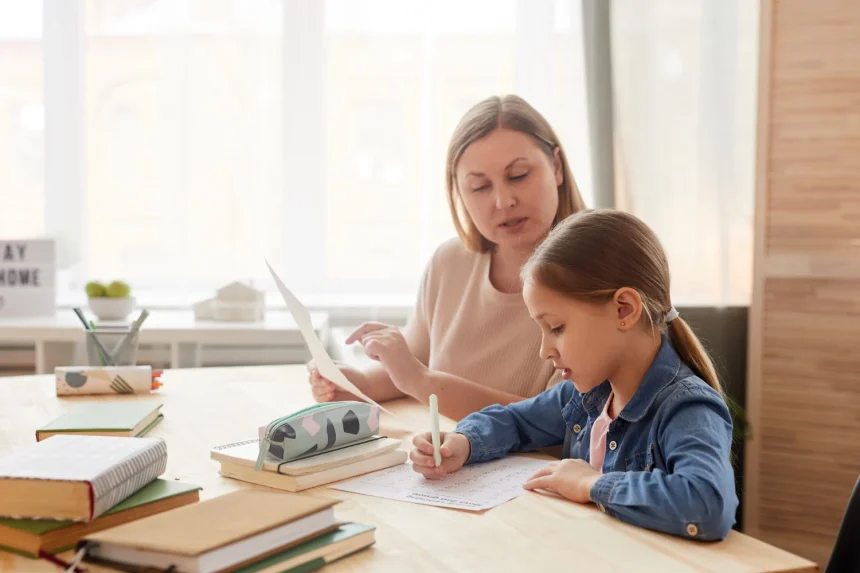
The number of families in England choosing to home educate their children has grown substantially in recent years.
There’s all kinds of reasons why families make that choice, from a child struggling in a mainstream classroom, to a desire for more flexibility, or simply wanting a different pace of learning. Whatever brings someone to home education, the first few months are usually the hardest, mostly because there is so much conflicting advice out there.
If it’s a choice you’re considering for your family, here’s 10 practical tips to help you approach home education with more confidence and less guesswork.
1. Knowing the law
In England, parents have a legal right to teducate their child at home under Section 7 of the Education Act 1996, and which requires only that the education provided is “efficient, full-time and suitable” to the child’s age, ability and any additional needs.
To homeschool a child, you don’t need a teaching qualification, and you’re not required to follow the National Curriculum, although many parents choose to use it loosely as a framework. The government’s own guidance for parents sets out exactly what is expected of you and what a local authority can and cannot ask of you.
2. Withdrawing from school
If a child is already enrolled in a mainstream school, withdrawing them requires writing a letter to the headteacher formally requesting their removal from the school roll. A school cannot refuse this request.
The one exception is where a child has an ‘Education, Health and Care Plan’, in which case the local authority’s agreement is needed first, because the school placement is tied to that plan.
3. Telling the local authority (even if you don’t have to)
Notifying your local authority is not always a legal requirement, but it’s worth doing anyway for two reasons.
- Telling them puts you on their radar for support, funding advice and any local home-education networks
- Informing them early on avoids any confusion later down the line if a school assumes your child is simply truant.
Local authorities cannot insist you follow the National Curriculum, and they cannot demand a home visit unless there is a genuine safeguarding concern.
4. Picking a style that suits your family, not someone else’s
There is no single “right” way to home educate.
Some families use a structured, classroom-style approach with set hours and workbooks. Others lean towards Charlotte Mason, Montessori or Steiner Waldorf methods, which focus more on independent exploration and creativity. Many settle somewhere in the middle, sometimes called an eclectic approach.
MyEdSpace’s guide to choosing a home education method and curriculum is a useful starting point if you’re not sure which fits your child best – it is worth testing a style for a few weeks rather than committing to it forever on day one.
5. Building a routine, that also includes time to breathe
A loose but consistent routine tends to work better than a rigid timetable copied from a school day. Block out time for the core subjects – English, Maths and Science – and then let other subjects flex around your child’s energy and interests.
Another tip is to involve your child in age-appropriate chores and giving them some ownership over their own schedule, as this helps the whole thing feel less like something being done for them, rather than to them.
6. Not trying to teach every subject yourself
Very few parents are confident across every subject – especially once kids reach their GCSEs and A-levels – and that’s fine.
Free resources such as BBC Bitesize can cover the basics, but for subjects where your child needs proper teaching and structured feedback, it is worth bringing in outside expertise rather than muddling through alone. Live online lessons – such as MyEdSpace’s courses, which are taught by qualified subject teachers across Maths, English and Science – can fill that gap at a fraction of the cost of private, one-to-one tutoring, and give your child some peer interaction in the process.
7. Budget realistically, not optimistically
Choosing to home educate is rarely without cost.
Beyond the obvious expenses like books, materials and any online courses, it’s worth factoring in the less obvious ones – printing, exam entry fees, days out that double as learning – and a potentially reduced household income if there’s a need to reduce working hours to be home more.
Sitting down and estimating a realistic annual cost before you start will save a lot of stress later.
8. Plan for exams well before results day matters
If your child is working towards GCSEs or A-levels, they’ll sit exams as a private candidate at an external exam centre, since they are not attached to a school.
Not every centre accepts private candidates for every subject, and spaces can fill up, so it is worth researching and booking your local options well in advance rather than waiting until the year of the exam.
9. Being deliberate about socialising
The socialisation question is the one home educators get asked most.
Sports clubs, drama groups, volunteering, part-time work and local home-education groups all give children regular contact with other people their age. But, this rarely happens by accident, so treat it as part of the weekly plan rather than an afterthought.
10. Looking out for signs of burnout
Home education can blur the line between “school time” and “family time” until there is no line left.
When making your routines, build in full days off, mix passive learning with hands-on activities and days out, and check in regularly with your child about how they are finding it. If a particular week isn’t working, it is fine to adjust the plan rather than push through it for the sake of consistency.
Home education looks different in every household, and there is no single formula that works for everyone. What tends to separate families who find it sustainable from those who burn out early is less about the curriculum they choose and more about building in flexibility, support and realistic expectations from the outset.
Andrew Lawn