Think about the last brand you remembered without seeing it on Instagram, Google, or your phone.
Maybe it was the café with the unmistakable packaging. Perhaps it was a local shop with a beautifully designed sign. Maybe you remember a business because someone handed you a particularly useful card at an event.
That is the interesting thing about offline branding. While so much business communication now happens through screens, physical experiences have not disappeared. Customers still walk into stores, attend conferences, open packages, receive printed materials, meet sales representatives, and carry branded items through their everyday lives.
In fact, physical touchpoints can complement digital branding by giving customers something they can actually see, hold, use, and remember. Recent discussions around physical branding continue to highlight packaging, signage, print materials, merchandise, and events as important parts of the customer experience.
The good news? You do not need a huge marketing budget to make your brand memorable offline. Often, a few thoughtful details can make a much bigger difference than a pile of generic promotional materials.
Here are seven practical ways to make your brand stick in people’s minds.
1. Give Your Brand a Consistent Physical Look
Imagine that you discover a business online and decide to visit its physical location. The website uses elegant typography, warm colours, and minimalist graphics. But when you arrive, the sign outside uses completely different colours and the printed materials look as though they belong to another company.
Something feels off.
This does not mean putting your logo on absolutely everything. Instead, establish a few recognisable elements such as colours, typography, imagery, tone, and graphic style.
For example, a small coffee shop might use earthy colours, handwritten-style typography, and simple illustrations online. Carrying those same visual ideas onto takeaway cups, menus, loyalty cards, and signage creates a familiar environment.
Over time, customers start recognising the brand before they even read its name.
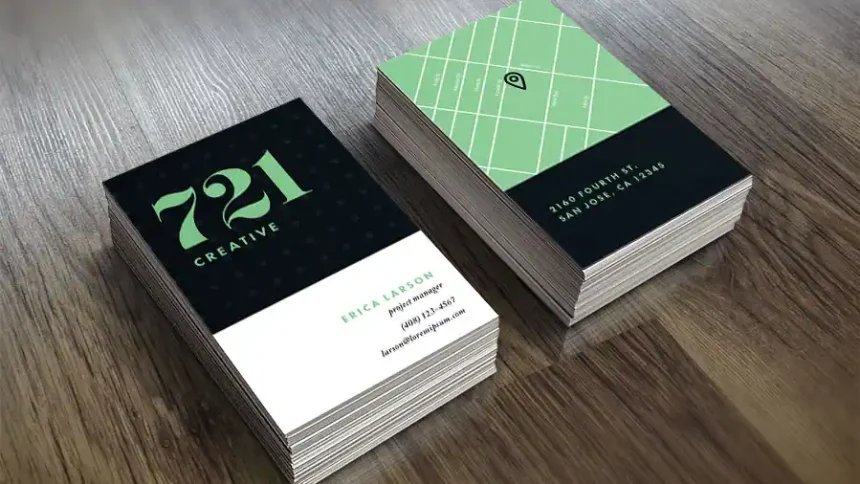
2. Turn Business Cards Into Conversation Starters
Business cards are small, but that does not mean they have to be forgettable.
Think about the number of generic cards you have probably received over the years. White background. Logo in one corner. Phone number. Email address. Done.
There is nothing technically wrong with that approach, but it does not give the recipient much reason to remember you.
When you create a business card, think beyond simply displaying contact information. Ask yourself what small detail could make the card feel connected to your personality or business.
A designer could use an unusual layout. A financial consultant might keep things clean and understated. A restaurant owner could incorporate a small illustration connected to the restaurant’s signature dish.
The card should still be easy to read, of course. Creativity should support the information rather than hide it.
You can also connect the physical card to your digital presence with a QR code. Instead of printing every possible detail, you could direct people to a portfolio, booking page, LinkedIn profile, or product catalogue.
That is where technology becomes useful. The physical card creates the memory, while the digital link makes continuing the relationship convenient.
3. Make Packaging Part of the Experience
If your business sells physical products, packaging is one of your biggest offline branding opportunities.
Think about how different it feels to receive a plain brown box compared with opening a package that clearly feels like it came from a particular brand.
You do not necessarily need expensive custom packaging. Sometimes the smallest details make the experience feel more personal.
A simple thank-you card, branded sticker, attractive tissue paper, product guide, or reusable box can transform an ordinary delivery into something customers remember.
Imagine ordering handmade skincare products and finding a small card inside explaining how to use the product properly. There is a practical benefit, but there is also a feeling that someone thought about the experience.
That feeling matters.
The important thing is to give the QR code a purpose. “Scan here” is not particularly exciting.
4. Create Something People Actually Want to Keep
Branded merchandise has a reputation for producing objects that people never asked for.
The problem is not merchandise itself. The problem is giving people something simply because you want your logo to be seen.
Instead, ask a more useful question: Would someone still use this if my logo were not on it?
If the answer is yes, you may have found a better promotional item.
A local gym could give members a useful water bottle. A university organisation might provide a quality notebook. A technology company could offer a practical laptop sleeve. A café could use reusable cups or tote bags.
The more naturally an item fits into someone’s routine, the more opportunities there are for your brand to be seen.
Physical branding works particularly well when the object has a genuine purpose. It becomes part of someone’s life instead of becoming another piece of advertising.
5. Make Your Physical Space Tell a Story
Your brand is not just what customers take home. It is also what they experience when they visit you.
A shop, office, restaurant, clinic, studio, or event booth can communicate your identity before anyone says a word.
Consider a small independent bookstore. Instead of covering every wall with promotional posters, the owners might create cosy reading areas, handwritten recommendations, themed displays, and small signs featuring interesting quotes.
None of these elements needs to scream the company name.
Together, however, they create an atmosphere that customers associate with the business.
The same idea applies to offices and event spaces. If your brand promises simplicity, the physical environment should feel organised and easy to navigate. If creativity is central to your identity, your space can reflect that through displays, colours, artwork, or interactive elements.
Physical environments are powerful because customers experience them directly rather than simply looking at an advertisement.
6. Use Events to Create Real Human Connections
Digital marketing can introduce your brand to thousands of people, but offline events give you something technology cannot completely replicate: face-to-face interaction.
Conferences, workshops, local markets, trade shows, networking events, and pop-ups all provide opportunities to create memorable experiences.
But simply putting your logo on a banner is not enough.
Think about what you can give people that is genuinely useful or interesting.
A cybersecurity company could offer a short security checklist. A fitness business could provide a five-minute posture assessment. A food brand could offer samples with recipe cards. A software company could demonstrate a useful feature rather than simply handing out brochures.
These experiences give people something to remember about the brand.
They also create natural opportunities to continue the conversation online. You could use a QR code to let visitors book an appointment, download a guide, join a mailing list, or access additional resources.
This creates a bridge between physical interaction and digital engagement rather than treating the two channels as separate worlds.
7. Add Small Personal Details
Sometimes the most memorable branding is not the most expensive.
It is the detail that feels human.
Imagine ordering from a small online business and finding a handwritten “Thank you, Sarah!” on the packaging. Or visiting a café where the staff remember your usual order. Or attending a workshop and receiving a printed guide with your name on it.
These details communicate attention.
Personalisation does not always require sophisticated technology. However, technology can make it easier to deliver at scale.
A customer management system can help businesses keep track of preferences and interactions. Digital printing makes personalised materials more accessible. QR codes can connect individual physical materials to tailored online resources.
The goal is not to make everything automated. It is to use technology behind the scenes while keeping the customer experience warm and human.
That distinction is important.
A personalised email generated automatically can feel generic. A thoughtfully designed package with a useful personalised note can feel completely different.
Bring Offline and Online Together
One of the biggest mistakes businesses can make is treating offline branding as completely separate from digital marketing.
Your customer does not necessarily see these as separate channels.
They might discover you through Instagram, visit your store, receive your packaging, scan a QR code, and then follow you on LinkedIn. To them, it is simply one relationship with your brand.
That means your physical materials should make the digital next step easy.
A poster can lead to an event registration page. A business card can lead to a portfolio. Packaging can lead to product instructions. A printed receipt can contain a loyalty offer.
The key is relevance.
Do not add QR codes just because they are fashionable. Give customers a clear reason to scan them.
Likewise, do not fill every physical surface with social media handles. Choose the one or two actions that genuinely make sense for the customer.
Make Your Brand Memorable, Not Just Visible
There is an important difference between visibility and memorability.
A logo printed on 500 promotional pens may technically give you 500 brand impressions. But if nobody wants to keep the pens, the exposure may not mean much.
A well-designed card, useful piece of packaging, thoughtful event experience, or memorable physical space can have a different effect because it creates context.
The best offline branding often answers three questions:
- Does this physical touchpoint feel unmistakably connected to the brand?
- Does it provide something useful, interesting, or enjoyable to the customer?
If the answer to both is yes, you are already moving in the right direction.
A More Human Approach to Branding
In a world filled with notifications, advertisements, emails, and social media posts, physical experiences can feel surprisingly personal.
A customer can forget an online advertisement within seconds. They might remember the packaging they enjoyed opening, the person who gave them genuinely useful advice at an event, or the small card they kept on their desk.
That is the real opportunity with offline branding.
You do not need to make everything bigger, louder, or more expensive. Instead, make the physical moments around your brand more thoughtful.
Look at your customer journey from beginning to end. Where do people meet your business in the real world? What do they touch? What do they take home? What do they see when they arrive? What happens after they make a purchase?
Then improve those moments one at a time.
Your website may introduce your brand, but the physical world can give people a reason to remember it. When thoughtful offline experiences and useful digital tools work together, your brand becomes more than something people see. It becomes something they experience.