Commercial rooftops are essential working areas for maintenance teams, engineers and contractors. From servicing air-conditioning units to inspecting drainage systems, workers may need to access these spaces regularly throughout the year.
Yet rooftop risks are not always as obvious as an exposed edge. Pipework, fragile surfaces, poor access routes and changing weather conditions can all turn routine maintenance into a potentially dangerous task. Identifying these less noticeable hazards is an important part of creating a safer commercial property.
Obstacles Across Access Routes
Modern commercial rooftops often contain extensive pipework, ducts, cables and mechanical equipment. These installations can interrupt the natural route between an access point and the area where maintenance is required.
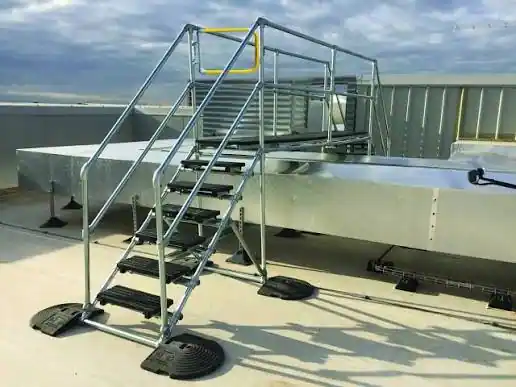
Workers may be tempted to climb or step over obstacles, particularly when carrying tools. This increases the chance of trips, slips, and awkward movements. Where fixed services regularly need to be crossed, dedicated step over platforms can provide a more controlled route without requiring workers to climb directly over pipes or other rooftop equipment.
Keeping designated routes clear also reduces unnecessary movement into higher-risk areas.
Fragile Rooflights and Surfaces
One of the most easily underestimated rooftop hazards is a fragile surface. Rooflights can sometimes blend into the surrounding roof, particularly when they are dirty, weathered or viewed in poor lighting.
Older roofing materials may also deteriorate over time. A surface that appears solid cannot automatically be assumed to support a person’s weight. Building managers should therefore ensure roof condition and fragile areas are considered during risk assessments before maintenance begins.
Unsafe Access and Exit Points
Risk starts before a worker has fully reached the rooftop. Ladders, roof hatches and other access points can create fall hazards during the transition onto or off the roof.
Access arrangements should be suitable for the building and the work being performed. They should also account for the fact that workers may be carrying tools or equipment. A route that appears straightforward when empty-handed can become considerably more difficult when transporting maintenance supplies.
Weather Can Change Conditions Quickly
Rain, frost, and strong winds can dramatically alter rooftop conditions. Even light rainfall may make certain surfaces slippery, while strong winds can affect balance and make carrying materials more difficult.
Standing water is another issue. Besides creating a slip hazard, it can indicate blocked drainage or deterioration that requires further investigation. Rooftop work should therefore be planned with current and expected conditions in mind rather than treated as a routine task regardless of the weather.
Poor Housekeeping Creates Additional Hazards
Loose cables, discarded packaging, unused equipment and maintenance materials can gradually accumulate on commercial rooftops. These items create trip hazards and may obstruct established access routes.
Regular inspections and good housekeeping can prevent small problems from becoming significant risks. Maintenance teams should have clearly defined areas for equipment and ensure materials are removed once work is complete.
Building a Safer Rooftop Environment
Effective rooftop safety requires more than focusing on the building’s perimeter. Managers should consider how workers enter the roof, where they need to travel, what obstacles they encounter, and how conditions may change.
Regular risk assessments, clearly planned access routes, appropriate safety systems, and good housekeeping can make rooftop maintenance considerably safer. By addressing overlooked hazards before work begins, commercial property owners can create an environment where essential maintenance can be completed with fewer unnecessary risks.