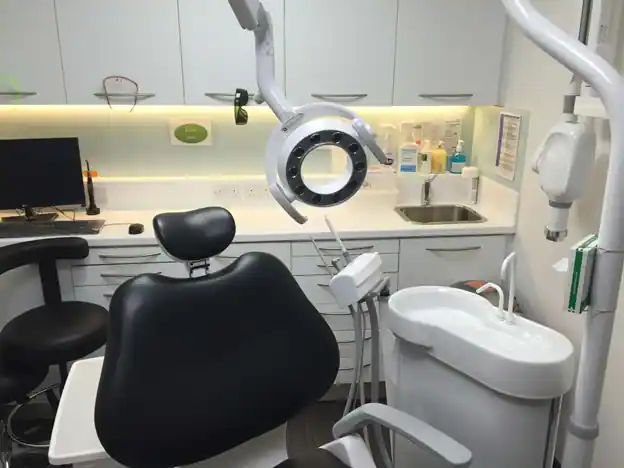
Dental interior design is often evaluated through appearance and patient experience, but its operational impact is equally important. Poor layouts can create workflow delays, reduce staff efficiency, limit infection control processes, and increase physical strain throughout the day. Improved design facilitates more efficient operations, boosts daily output, and enables practices to provide more reliable service. The value of investing in design extends far beyond how the clinic looks to patients.
Problem 1: Inefficient Clinical Workflow Between Surgery and Decontamination
One of the most important operational choices in any dental practice design is the physical arrangement of the treatment room and the decontamination area. When this relationship is poorly managed, treatment rooms distant from decontamination, inadequate passing facilities between dirty and clean areas, or workflow routes that create cross-contamination risk, the result is both a clinical compliance problem and an efficiency problem.
What Good Workflow Design Between Surgery and Decon Looks Like
- Decontamination room positioned in direct adjacency to treatment rooms, minimising instrument handling distance
- A clear dirty-to-clean workflow within the decontamination room, receiving instruments on one side, returning sterile instruments from the other
- Passing hatch or clearly defined routing between the treatment room and decontamination that avoids cross-contamination
- Adequate storage for sterile instruments close to the point of use, reducing retrieval time during clinical sessions
Practices that resolve this through dental interior design report measurable improvements in clinical turnaround time between patients, which directly affects appointment capacity and therefore revenue.
Problem 2: Inadequate Ventilation and Infection Control Infrastructure
Infection prevention and control requirements in dental practice are specific, detailed, and subject to regulatory inspection. Design decisions that inadequately account for ventilation, air changes per hour in treatment rooms, negative pressure requirements in aerosol-generating procedure environments, and the separation of clean and contaminated air pathways, create compliance risks that are expensive to remedy after the build is complete.
| Ventilation Requirement | Design Solution |
| Minimum hourly air changes in treatment areas | Mechanical ventilation system designed to meet HTM 03-01 guidance |
| Aerosol management during AGPs | Enhanced extraction and filtration in rooms where aerosols are generated |
| Separation of dirty and clean zones | Physical separation of workflow paths, not just procedural instruction |
| Staff toilet and welfare facilities | positioned to prevent welfare and clinical areas from becoming contaminated |
Dental interior design that addresses these requirements from the outset builds compliance into the physical environment rather than relying on procedural controls to compensate for infrastructure inadequacy.
Problem 3: Poor Staff Ergonomics That Create Long-Term Health Problems
Dentistry is physically demanding work. Clinicians spend extended periods in constrained postures, seated, leaning, and working with precision instruments in restricted access environments. The design of the treatment room, the positioning of the dental chair, the unit, the work surfaces, and the clinician’s stool, directly affects whether the physical demands of this work are managed well or whether they accumulate into the musculoskeletal problems that affect a significant proportion of dental professionals.
Ergonomic Design Principles for Treatment Rooms
- Chair and unit positioning that allows the clinician to work within the optimal twelve o’clock position without excessive reach or trunk rotation
- Work surface heights calibrated to the clinician’s seated position rather than standardised to an assumed average
- Instead of needing to be repeatedly extended or rotated to access, instruments and materials are stored inside the reach zone
- Adequate lighting at the clinical zone that reduces the need for forward head posture to see clearly
These decisions are made in the design and fit-out phase. They are costly to replace once installed, and the clinical team is affected physically every working day if they are installed incorrectly.
Problem 4: Reception and Patient Flow Bottlenecks
A reception desk that creates a queue visible to the waiting area, a layout that routes arriving and departing patients through the same corridor simultaneously, or a payment and rebooking process conducted in a space that is too small to allow privacy, all of these create friction in the patient flow that slows the practice, creates visible awkwardness, and reduces the patient experience.
Better dental interior design resolves these bottlenecks by:
- Positioning the reception desk to allow clear sightlines to the entrance without creating a public queue in the waiting area
- Designing a patient flow route that separates arrivals and departures where possible
- Providing a dedicated payment and rebooking space that allows the conversation to happen privately
- Ensuring adequate width in clinical corridors for patient movement without congestion during busy periods
Problem 5: Insufficient Storage That Clutters Clinical Spaces
Clinical storage is consistently underspecified in dental practice design, because storage is not the exciting element of a design brief, and it is often the area where budget pressure produces the most compromise. As a result, there is insufficient storage in treatment rooms and decontamination facilities, surfaces are littered with goods that have nowhere better to go, and clinical efficiency is diminished by the time spent finding equipment and supplies.
Adequate, well-designed clinical storage is not a luxury. It is a functional requirement that affects:
- The cleanliness and professional appearance of clinical areas
- The efficiency with which clinicians set up and clear down between patients
- The ability to maintain organised, accessible stock of consumables and materials
- Compliance with infection control standards that require surfaces to be kept clear
Problem 6: Staff Welfare Facilities That Affect Retention
Staff welfare facilities, the staff room, locker provision, toilets, and break space, are frequently treated as an afterthought in dental practice design. In a profession where staff retention is a significant operational challenge, the quality of the working environment across the full working day matters more than many practice owners acknowledge until they experience the cost of losing clinical staff.
A dental office that has made investments in cozy, useful staff welfare facilities conveys to its employees that their perception of the workplace is important, which has a real impact on morale, retention, and the standard of care provided by a workforce that is truly appreciated.
Conclusion
Improved dental interior design addresses operational issues that are important to the clinical function, they are embedded within it. Workflow efficiency, infection control infrastructure, staff ergonomics, patient flow management, clinical storage, and staff welfare all affect how well the practice runs on every working day. Divo Interiors works with dental practices that understand the full operational scope of good design, delivering fit-outs and refurbishments that solve real problems rather than simply producing a space that looks impressive on completion.
Author Bio: UV Jadeja
UV Jadeja, the head honcho at Divo Interiors Ltd in London, has spent a significant number of years in the commercial fit-out and refurbishment industry, specialising in dental practices. Under his leadership, the company has designed and renovated clinics of some of the most well-known dental practices in the country. He often shares his insights & extensive industry knowledge with the general public through engaging blog posts.