Evaporated milk is one of those pantry staples that many of us walk past without a second thought — until a recipe specifically calls for it. Yet this humble canned ingredient holds a fascinating history, a unique production process, and a versatility that extends far beyond pumpkin pie and creamy pasta sauces. Whether you are looking to understand what evaporated milk actually is, how it differs from other dairy products, or how to use it in everyday cooking, this guide covers everything you need to know.
What Exactly Is Evaporated Milk?
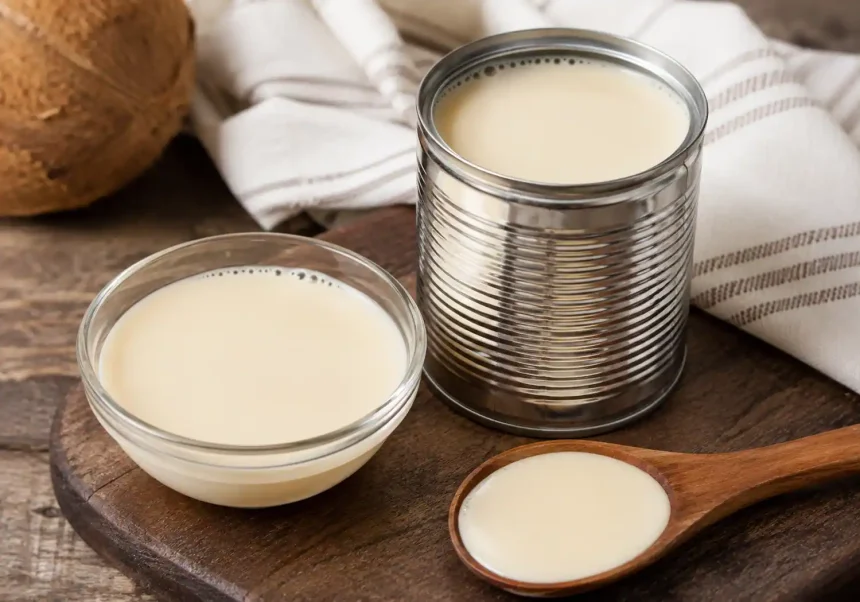
Evaporated milk is a shelf-stable canned dairy product made by removing roughly 60 percent of the water from fresh cow’s milk. The process involves heating the milk under controlled conditions, which evaporates the water and concentrates the milk’s natural nutrients, proteins, and sugars. The result is a thick, creamy liquid with a slightly caramelized color and a subtly sweet, toasty flavor that distinguishes it from regular milk.
What makes evaporated milk particularly interesting is what happens during the heating process. As the milk is gently heated, the natural milk sugars — primarily lactose — undergo a mild caramelization. This is why evaporated milk has a pale tan hue and a flavor profile that hints at butterscotch or toffee, even though no sugar has been added. The concentration of milk solids also gives it a velvety texture that enriches both sweet and savory dishes.
It is important not to confuse evaporated milk with sweetened condensed milk. While both undergo the same water-evaporation process, sweetened condensed milk has a significant amount of sugar added — roughly 40 to 45 percent of its total weight — making it thick, syrupy, and intensely sweet. Evaporated milk, by contrast, contains no added sugar and remains unsweetened, which is why the two products are not interchangeable in recipes.
A Brief History of Evaporated Milk
The invention of evaporated milk dates back to the mid-19th century, driven by a practical problem: before refrigeration, fresh milk spoiled quickly and was difficult to transport. In 1856, an American inventor named Gail Borden received a patent for a process to condense milk in a vacuum, inspired by his earlier failed attempt to create a shelf-stable meat biscuit. Borden’s method removed water from milk while preserving its nutritional integrity, allowing it to be stored without refrigeration for extended periods.
Evaporated milk gained prominence during the American Civil War, when it became a critical ration for soldiers. By the early 20th century, it had become a household staple across North America and Europe, particularly in areas where fresh milk was scarce or expensive. Its role during both World Wars further cemented its reputation as a reliable, nutritious food that could be shipped anywhere.
How Evaporated Milk Differs from Other Dairy Products
Understanding where evaporated milk fits within the dairy landscape helps clarify when and why to use it.
Evaporated milk versus fresh milk: Evaporated milk contains about twice the protein, calcium, and other nutrients of an equal volume of fresh whole milk, simply because it has been concentrated. When a recipe calls for evaporated milk, substituting regular milk will yield a thinner, less rich result. However, you can reconstitute evaporated milk by mixing it with an equal amount of water to approximate the consistency and nutritional profile of fresh milk.
Evaporated milk versus heavy cream: Heavy cream contains significantly more fat — usually between 36 and 40 percent — compared to evaporated milk, which typically hovers around 7 to 8 percent fat. This makes evaporated milk a lighter alternative in recipes where you want creaminess without the extra richness. It works well in soups, sauces, and coffee drinks where heavy cream might feel too indulgent.
Evaporated milk versus half-and-half: Half-and-half sits somewhere between evaporated milk and heavy cream in terms of fat content, usually around 10 to 18 percent. The key difference is that half-and-half does not have the concentrated milk solids or the lightly caramelized flavor that evaporated milk brings, making evaporated milk the better choice for adding depth to dishes.
Nutritional Profile of Evaporated Milk
A standard two-tablespoon serving of evaporated milk — roughly equivalent to a splash in coffee or a small portion in a recipe — delivers a concentrated dose of nutrients. In a quarter-cup serving, you can expect around 80 to 85 calories, 4 to 5 grams of fat, 4 grams of protein, and 6 grams of carbohydrates. The calorie and fat counts shift depending on whether you choose whole, reduced-fat, or fat-free varieties.
The real nutritional strength of evaporated milk lies in its micronutrient density. A single quarter-cup serving provides approximately 15 to 20 percent of the daily recommended calcium intake, along with meaningful amounts of phosphorus, magnesium, and potassium. Many brands also fortify their evaporated milk with vitamins A and D, further enhancing its nutritional profile. The protein is high-quality dairy protein, containing all nine essential amino acids that the body cannot produce on its own.
For those who are mindful of lactose, it is worth noting that evaporated milk is not lactose-free — in fact, the concentration process means lactose is more concentrated per serving than it is in fresh milk. However, some brands now offer lactose-free evaporated milk options, and plant-based evaporated milk alternatives made from oat, soy, or coconut milk are increasingly available for those who avoid dairy altogether.
Practical Uses for Evaporated Milk in the Kitchen
The versatility of evaporated milk is where it truly shines. Because it brings richness without excessive fat and a subtle depth of flavor without overwhelming other ingredients, it has found a home in cuisines around the world.
Soups, Chowders, and Sauces
Evaporated milk is an exceptional addition to creamy soups and chowders. Unlike fresh milk, it does not curdle as easily when heated at higher temperatures, making it more forgiving in hot pots and slow cookers. A splash of evaporated milk stirred into potato soup, clam chowder, broccoli cheddar soup, or tomato bisque adds body and silkiness. The same principle applies to pasta sauces — evaporated milk can transform a simple tomato or mushroom sauce into something velvety and satisfying without the heaviness of cream.
Baked Goods and Desserts
Perhaps the most famous use of evaporated milk is in pumpkin pie filling, where its concentrated consistency helps the custard set properly without making it overly dense. Beyond pie, evaporated milk enriches bread puddings, flan, tres leches cake, and rice pudding. In many traditional Latin American desserts, evaporated milk is a foundational ingredient that lends richness and a signature caramel note. It also works beautifully in fudge, ganache, and homemade ice cream bases, contributing smoothness and preventing the formation of ice crystals.
Coffee, Tea, and Beverages
In many parts of the world — particularly Southeast Asia and Latin America — evaporated milk is a beloved addition to coffee and tea. Thai iced tea, Hong Kong-style milk tea, and Malaysian teh tarik all rely on evaporated milk for their characteristic creaminess and slightly sweet, malty undertones. Unlike fresh milk, evaporated milk stands up well to the strong, bold flavors of these brews without getting lost.
Macaroni and Cheese and Casseroles
A less obvious but highly effective use for evaporated milk is in macaroni and cheese. The concentrated milk proteins in evaporated milk help emulsify melted cheese, resulting in a smooth, cohesive sauce that does not break or become grainy. This is why many stovetop mac and cheese recipes specifically call for evaporated milk rather than fresh milk or cream. The same logic extends to casseroles, gratins, and scalloped potatoes, where evaporated milk contributes both structure and richness.
Two Easy Recipes Featuring Evaporated Milk
Stovetop Macaroni and Cheese
This recipe produces a luscious, creamy mac and cheese that rivals any baked version — and it comes together in about 20 minutes.
Ingredients:
- 8 ounces elbow macaroni
- One 12-ounce can of evaporated milk
- 2 cups shredded sharp cheddar cheese
- 1 tablespoon butter
- 1 teaspoon mustard powder
- Salt and black pepper to taste
Instructions: Cook the macaroni in salted boiling water until just al dente, then drain and return it to the pot. Over low heat, stir in the butter until melted, then pour in the evaporated milk and sprinkle in the mustard powder. Add the shredded cheese gradually, stirring constantly, until the sauce is smooth and coats every piece of pasta. Season with salt and pepper and serve immediately. For a spicier version, add a pinch of cayenne or a few dashes of hot sauce along with the cheese.
Three-Ingredient Fudge
Evaporated milk is the secret to foolproof stovetop fudge with a silky texture.
Ingredients:
- 2 cups semi-sweet chocolate chips
- One 14-ounce can of sweetened condensed milk (note: this recipe uses condensed, not evaporated)
- 1 teaspoon vanilla extract
Alternative evaporated milk fudge: Combine 1 cup of evaporated milk, 2 cups of granulated sugar, 2 tablespoons of butter, and a pinch of salt in a saucepan. Bring to a gentle boil and cook, stirring frequently, until the mixture reaches the soft-ball stage (about 235°F on a candy thermometer). Remove from heat, add 2 cups of chocolate chips and 1 teaspoon of vanilla, and stir until smooth. Pour into a lined pan, chill until set, and slice into squares.
How to Store and Handle Evaporated Milk
Unopened cans of evaporated milk are remarkably shelf-stable and can last for a year or more when stored in a cool, dry pantry. Always check the best-by date stamped on the can, but in practice, evaporated milk often remains safe and usable well beyond that date as long as the can is undamaged and properly sealed.
Once opened, treat evaporated milk as you would fresh milk. Transfer any unused portion to an airtight container, refrigerate it promptly, and use it within five to seven days. Avoid storing evaporated milk in the opened can, as this can impart a metallic taste. You can also freeze evaporated milk in ice cube trays, then transfer the frozen cubes to a freezer bag — this is a convenient way to have small portions ready for recipes without wasting a half-used can.
Is Evaporated Milk Right for You?
Evaporated milk is neither a relic of a bygone era nor a niche ingredient reserved for holiday baking. It is a practical, nutrient-dense, and remarkably versatile pantry staple that can simplify cooking, enhance texture, and add subtle richness to an impressive range of dishes. From a quick weeknight mac and cheese to an elaborate tres leches cake, from a morning cup of tea to a hearty winter chowder, evaporated milk earns its place on the shelf. Once you begin experimenting with it, you may find yourself reaching for that small can far more often than you ever expected.
Written by Clara Bennet, a food writer and recipe developer with over a decade of experience exploring pantry staples and practical home cooking.