
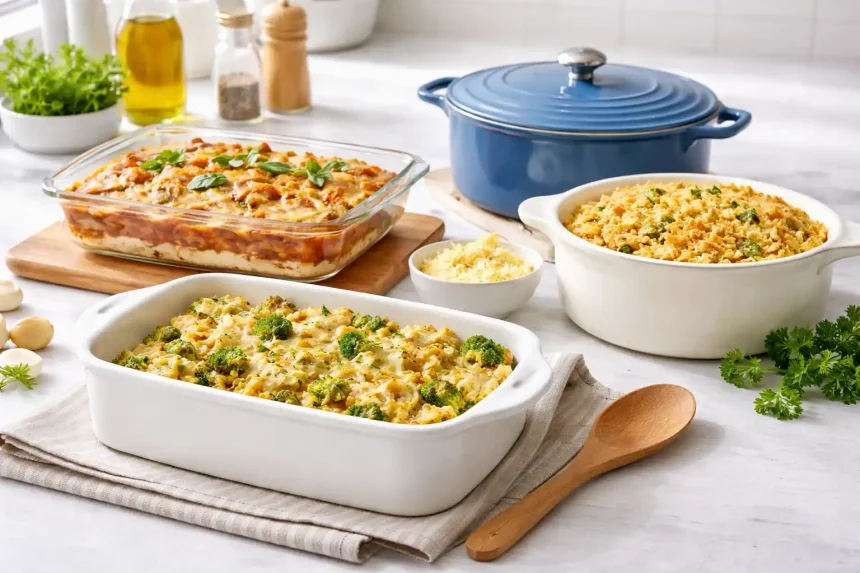
If your weeknights swing between “What’s for dinner?” and “Please be easy,” the right casserole dish is your shortcut to comfort, simplicity, and fewer pans to scrub. In this fresh guide, I’ll break down what actually matters—materials, capacity, shape, lids, and care—so your bakes emerge bubbling, evenly cooked, and ready to serve.
The Casserole Advantage You’ll Actually Feel
A well-chosen casserole dish quietly solves three everyday kitchen challenges:
- Consistency you can taste: Even heat means creamy centers and bronzed edges—no scorched spots.
- Convenience baked in: Build, bake, serve, and store in the same vessel with minimal cleanup.
- Table-ready looks: From oven to table, it stays warm and looks inviting.
Behind the scenes, bakeware performance depends on two things: thermal conductivity (how fast it heats) and heat retention (how long it stays hot). Dense materials hold heat for gentle, steady cooking; lighter ones heat quickly but cool fast. Choose based on what you cook most—silky gratins, lasagna, roasted vegetables, mac and cheese, or cobblers.
Choosing the Right Material (And Why It Matters)
Ceramic and Stoneware
- Best for: Gratins, lasagna, cobblers, casseroles you’ll serve at the table
- Why you’ll like it: Excellent heat retention and evenly browned tops; often beautiful enough for serving
- Watch-outs: Can be slower to preheat; avoid sudden temperature shocks to prevent cracking
Enameled Cast Iron
- Best for: Deep bakes, braises, baked pasta, and dishes that go from stovetop to oven
- Why you’ll like it: Stellar heat retention and durability; some pieces include lids for moisture control
- Watch-outs: Heavier and pricier; avoid metal utensils to protect the enamel
Glass (Borosilicate or Tempered)
- Best for: Everyday casseroles, layered dishes, and recipes where visibility helps
- Why you’ll like it: You can see the doneness from the sides; generally affordable and dishwasher-safe
- Watch-outs: Loses heat faster once out of the oven; can be sensitive to extreme thermal shock
Stainless Steel and Aluminum (Clad or Anodized)
- Best for: Quick bakes and when you value light weight and fast heating
- Why you’ll like it: Responsive, often with tight-fitting lids and easy storage
- Watch-outs: Can brown unevenly if too thin; look for heavy-gauge or clad construction
Size, Shape, and Depth: Fit Your Food (and Your Oven)
Standard Sizes You’ll See Everywhere
- 9×13 inches (3–3.5 qt): The weeknight workhorse for lasagna, enchiladas, mac and cheese, brownies
- 8×8 or 9×9 inches (2–2.5 qt): Smaller casseroles, side dishes, desserts
- Round 3.5–5 qt: Great for layered bakes, cobblers, and braises
Depth and Capacity Tips
- Shallow (1.5–2 inches): Faster evaporation, crisper tops
- Standard (2–2.5 inches): Balanced moisture and browning for most recipes
- Deep (3 inches+): Juicier results and fewer spills for saucy or layered dishes
Pro move: Match your recipe’s intended volume to your dish capacity. Overfilling leads to soggy centers and spillovers; underfilling cooks too fast and dries out.
Lids, Rims, and Handles: The Small Things That Matter
Lids and Moisture Control
- Tight-fitting lids: Lock in steam for tender results and reheating
- Vented or leave ajar: Encourage evaporation to crisp the top
- Foil flexibility: A simple foil tent mimics a lid and prevents overbrowning
Handles and Rims
- Wide, grippy handles: Safer transfers with oven mitts
- Rolled rims: Resist chipping and make pouring easier
- Nesting shapes: Save storage space and protect delicate materials
Oven-Safe, Broiler-Safe, and Freezer-Safe: Know the Limits
- Oven-safe temps: Many ceramics and glass max out around 450–500°F; enameled cast iron can go higher
- Broiler use: Most glass is not broiler-safe; check manufacturer guidance for ceramics and enamel
- Freezer-to-oven: Avoid drastic jumps. If a dish is freezer-safe, thaw in the fridge before baking
Nonstick, Glazes, and Surface Care
- Glazed stoneware and enamel: Naturally food-release friendly; avoid abrasive scouring pads
- Nonstick coatings: Easy cleanup, but skip metal tools and high broil
- Seasoned cast iron (bare): Not typical for casseroles, but if used, keep it well-seasoned and oiled
Serving, Storing, and Reheating Smarter
Serve Like You Mean It
- Trivets on the table: Protect surfaces; most stoneware and glass radiate heat for a while
- Warm plates: Keep portions hot and appetizing
Store Without the Sog
- Cool first: Let the dish reach room temp before refrigerating to avoid condensation
- Use tight lids: Prevents odor transfer and keeps textures intact
- Portion and pack: For busy weeks, divide into airtight containers for grab-and-go meals
Reheat for Best Texture
- Low and slow (300–325°F): Preserves moisture and reheats evenly
- Add a splash: A tablespoon of broth or milk revives creamy bakes
- Uncover at the end: Crisp the top for 5–10 minutes before serving
Matching Dish to Recipe: Quick Picks
For Ultra-Creamy Casseroles
Choose glazed ceramic or enameled cast iron with a lid; bake covered, then uncover to brown.
For Crispy-Top Mac and Cheese
Go shallow ceramic or metal; finish briefly under a broiler if the dish allows.
For Lasagna That Holds Its Shape
Use a deep 9×13 ceramic or enameled cast iron; let it rest 10–15 minutes before slicing.
For Roasted Veggie Bakes
Metal or enameled cast iron speeds browning; avoid overcrowding to prevent steaming.
Care and Longevity: Make It Last
- Gentle soak: Warm water and a baking soda paste lift stuck bits without scratching
- Avoid thermal shock: Don’t add cold liquid to a blazing hot dish—or vice versa
- Protect finishes: Silicone or wood utensils keep glazes and enamel pristine
Budget, Aesthetics, and Sustainability
- Budget-friendly: Tempered glass and basic stoneware deliver solid results without splurge
- Investment-worthy: Enameled cast iron lasts decades and doubles as serveware
- Eco-minded: Durable, repairable pieces reduce waste; look for replaceable lids and warranty support
Final Take: Build Your Two-Dish Capsule
- Everyday hero: A 9×13-inch glazed ceramic or glass dish (3–3.5 qt)
- Deep-diver: A 4–5 qt enameled cast-iron casserole with lid for braises and layered bakes
With these two, you’ll cover weeknights, weekends, potlucks—and the “What’s for dinner?” spiral—without breaking stride.


