Introduction
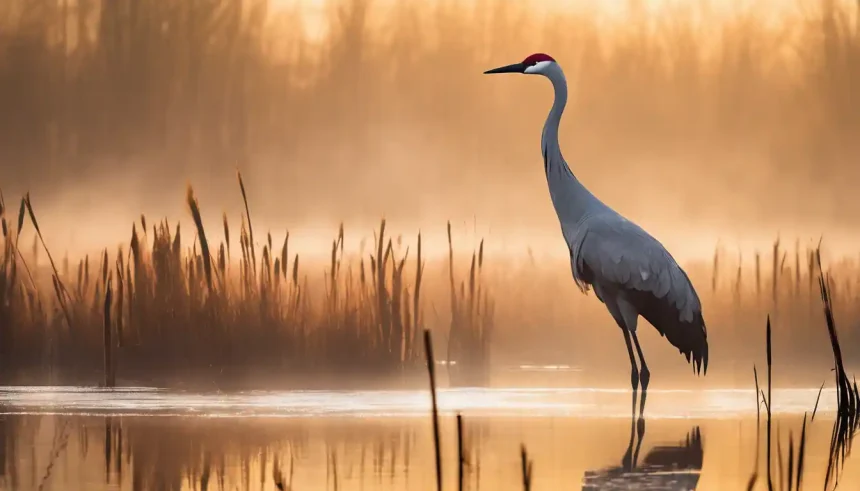
I’ve always been a little awed by cranes. They stride through wetlands like calm architects, measuring space with every step. As a group, cranes (family Gruidae, order Gruiformes) are big, long‑legged, and long‑necked birds, perfectly adapted to marshes, floodplains, and open grasslands. Today, 15 living species span five continents, and their migrations stitch together river deltas, prairies, and high plateaus. In this overview, I map out the global diversity of crane species, their key traits, habitats, and the conservation stories that define their future.
What Makes a Crane a Crane?
Cranes share a recognizable silhouette, yet each species has its own flair. A few signatures set the family apart:
- Long legs and necks for wading and vigilant foraging.
- Powerful wings built for soaring migration and ritualized dancing.
- Loud, resonant calls amplified by a coiled trachea, carrying over kilometers.
- Omnivorous diets—grains, tubers, insects, small vertebrates—shift with season and habitat.
Behavior and Social Life
- Courtship dances: elaborate bows, leaps, and tosses of grass reinforce pair bonds.
- Territoriality during breeding, gregariousness in wintering flocks.
- High site fidelity: many cranes return to the same breeding and wintering grounds annually.
Global Distribution at a Glance
Cranes occur across Africa, Eurasia, Australia, and North America, with vagrant or migratory connections into the Middle East and the Indian subcontinent. Wetlands are their lifeblood, but several species also exploit agricultural fields during non‑breeding seasons. Because their life cycles depend on intact hydrology and open landscapes, cranes are sensitive indicators of ecosystem health.
The 15 Extant Crane Species
Below I group the species by major regions, highlighting distinctive features. I’m keeping the descriptions crisp so you can grasp what sets each species apart at a glance.
Africa
- Grey Crowned Crane (Balearica regulorum): A golden crown of stiff feathers and a dignified gait make this savanna icon unforgettable. Often seen near shallow wetlands and cultivated lands, it nests in tall grasses. Threats include wetland loss and trade.
- Black Crowned Crane (Balearica pavonina): Similar regal crest, but with darker plumage. It favors Sahelian wetlands and seasonal floodplains. Both crowned cranes roost in trees—unusual among cranes—thanks to a fully functional hallux (hind toe).
Eurasia
- Common Crane (Grus grus): One of the most widespread, breeding across northern Europe and Asia. Ash‑grey with a black and white face and a red crown patch, it forms immense migratory flocks.
- Demoiselle Crane (Anthropoides virgo): The smallest crane, elegant with long white neck plumes and striking black front. It braves high passes of the Himalayas on migration.
- Siberian Crane (Leucogeranus leucogeranus): Mostly white with black wingtips; critically endangered. It depends on shallow wetlands, especially in the Ob River basin and wintering grounds in China and Iran.
- White‑naped Crane (Antigone vipio): Grey body with a white nape and crimson face patches. It breeds in northeast Asia and winters in East Asia’s lowlands.
- Hooded Crane (Grus monacha): Compact and dusky with a white hood; it breeds in Russia and winters mainly in Japan and China.
- Black‑necked Crane (Grus nigricollis): A high‑plateau specialist, breeding on the Tibetan Plateau’s alpine wetlands; revered in Himalayan cultures.
- Red‑crowned Crane (Grus japonensis): A symbol of longevity in East Asia, snow‑white with black secondaries and a red crown. It favors reedbeds and tidal flats; among the rarest and most celebrated cranes.
South Asia
- Sarus Crane (Antigone antigone): The tallest flying bird, towering over wetlands and rice paddies of India, Nepal, Southeast Asia, and northern Australia (introduced/natural expansion). It forms long‑lived pairs with resonant duets.
Australia
- Brolga (Antigone rubicunda): Known for graceful, looping dances. It occupies northern and eastern Australian wetlands and floodplains, sometimes overlapping with Sarus in the north.
North America
- Sandhill Crane (Antigone canadensis): From Arctic tundra to prairies, this species shows remarkable ecological breadth. Mass gatherings along the Platte River are a migration spectacle.
- Whooping Crane (Grus americana): Tall, white, and critically endangered, it relies on intensive conservation, including captive breeding and guided migration programs.
Identification Tips
- Plumage: Look for neck and head patterns—crowns, masks, and contrasting secondaries are often decisive.
- Shape and size: From petite Demoiselles to towering Sarus, size helps narrow choices.
- Voice: Duets and trumpeting calls vary by species; seasoned birders recognize signatures.
- Habitat and range: Knowing the region and wetland type (alpine marsh vs. coastal reedbed vs. prairie pothole) quickly narrows possibilities.
Habitats and Ecology
Cranes build nests in shallow water or dense grasses, laying one to two eggs. Chicks are precocial, leaving the nest soon after hatching and following parents as they forage. Many species are partial or long‑distance migrants, timing movements to rainfall, thaw cycles, and crop harvests. In agricultural landscapes, cranes glean waste grain, which can reduce conflicts when fields are managed to keep birds away from vulnerable crops.
Diet and Foraging
- Plant foods: grains, seeds, tubers, sedges, and roots in wetlands and fields.
- Animal prey: insects, snails, crustaceans, small fish, amphibians, and occasional rodents.
- Seasonal flexibility: switching between plant and animal foods helps cranes ride out droughts and hard winters.
Conservation Status and Threats
Several crane species are globally threatened. The Siberian and Whooping Cranes are iconic conservation priorities, while the Red‑crowned and Black‑necked Cranes face habitat fragmentation and water diversion. Key pressures include:
- Wetland drainage and river regulation that alter hydrology.
- Agricultural intensification that removes nesting cover.
- Collision risks with power lines and wind infrastructure in flyways.
- Illegal capture and trade in some regions.
- Climate change shifting rainfall patterns and snowmelt timing.
Conservation Success Stories
- Reintroduction programs for Whooping Cranes, with careful genetic and behavioral management.
- Protected flyway networks and wetland reserves across East Asia for Hooded and White‑naped Cranes.
- Community‑based stewardship in India supporting Sarus Crane nesting in rice landscapes.
How to Support Crane Conservation
- Visit wetlands responsibly and report sightings to citizen‑science platforms.
- Support organizations that secure water rights and restore floodplains.
- Advocate for bird‑safe power infrastructure and strategic siting of turbines along flyways.
- Encourage landscape‑level planning that balances agriculture with wildlife corridors.
Watching Cranes: Practical Tips
- Optics: 8x–10x binoculars are ideal; a spotting scope helps at long distances.
- Timing: Dawn and dusk offer the best light and active movements to and from roosts.
- Ethics: Keep a respectful distance, especially near nests and staging areas.
- Field notes: Sketch head patterns and note calls; photos help confirm tricky IDs.
Bottom Line
Cranes connect continents and cultures. Their survival hinges on living rivers, healthy wetlands, and smart coexistence in working landscapes. When we protect cranes, we tend to protect entire watersheds—an elegant bargain for birds and people alike.