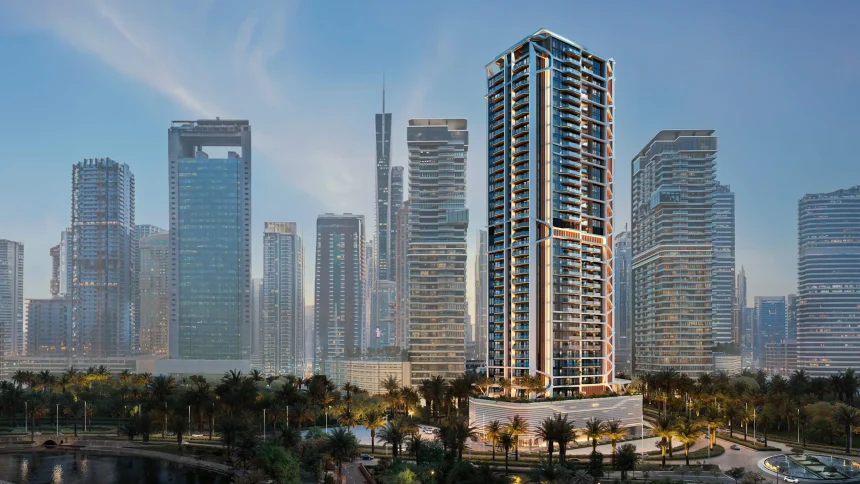
The upper tier of Dubai’s residential market operates differently from the broader apartment sector. Buyers entering the penthouse segment are rarely making decisions based only on square footage, rental yield, or short term market movement. In many cases, the acquisition is tied to wealth positioning, international mobility, lifestyle control, and long duration asset preservation.
That distinction is important because luxury real estate in Dubai is no longer viewed solely as discretionary spending. Among high net worth buyers, premium residential assets increasingly function as part of broader global wealth allocation strategies.
This shift has helped sustain demand for Dubai penthouses even during periods when other segments of the market experience slower transactional activity. The buyer profile at this level is fundamentally different from the mid market residential sector, and so are the motivations behind acquisition behavior.
Scarcity Plays a Bigger Role Than Many Buyers Realize
Unlike standard residential inventory, penthouses exist in relatively limited supply across Dubai’s prime districts.
A residential tower may contain hundreds of apartments while offering only a small number of true penthouse units. In some developments, there may be only one full floor penthouse serving the entire building. That scarcity naturally changes pricing behavior and buyer competition, particularly in established waterfront and central districts.
More importantly, not all luxury units qualify as genuine penthouses from a market perspective.
Sophisticated buyers usually distinguish between:
- oversized apartments marketed at premium pricing
- upper floor residences with limited exclusivity
- architecturally distinct penthouse properties with unique layouts, privacy advantages, and unobstructed positioning
The strongest demand typically concentrates around assets that cannot be easily replicated within the same area.
This is one reason prime Dubai penthouses in locations such as Palm Jumeirah, Downtown Dubai, Dubai Marina, and Emirates Hills often retain stronger pricing resilience than broader luxury inventory during changing market conditions.
The appeal is tied partly to property quality, but also to replacement difficulty. Buyers understand that highly differentiated assets remain limited even as new developments continue entering the market.
The Buyer Profile Has Become Increasingly International
Dubai’s luxury market has gradually evolved into a meeting point for globally mobile wealth.
Buyers now come from a wide range of regions including Europe, the Middle East, Asia, Africa, and North America. Many already hold residential assets in cities such as London, Singapore, New York, or Monaco before entering Dubai’s premium property sector.
As a result, purchasing standards have become far more sophisticated.
High net worth buyers comparing international luxury markets are not evaluating Dubai in isolation. They are comparing:
- ownership flexibility
- taxation structure
- lifestyle accessibility
- security
- privacy
- service standards
- global connectivity
against competing cities worldwide.
Dubai performs strongly in several of these categories simultaneously, which helps explain why the luxury residential market continues attracting international attention despite broader economic uncertainty in other regions.
For many overseas buyers, penthouse ownership in Dubai is connected not only to investment considerations, but also to geographic diversification and personal mobility planning.
That creates a more layered demand profile than conventional luxury consumption alone.
Prime Location Has a Different Meaning in the Luxury Segment
Location always matters in real estate, but within the penthouse market, location quality operates at a far more granular level.
A penthouse facing an unobstructed coastline often trades within an entirely different buyer category than a nearby unit without equivalent positioning advantages.
This creates micro distinctions inside already premium districts.
In practical terms, buyers evaluating luxury property at this level often prioritize:
- visual exclusivity
- privacy from neighboring towers
- direct access to premium infrastructure
- architectural individuality
- reduced density within the building itself
The market therefore behaves less like conventional apartment purchasing and more like collectible real estate selection.
That distinction influences both pricing and liquidity over time.
Wealth Preservation Has Become Part of the Demand Story
A noticeable shift in recent years is the growing role of wealth preservation within luxury property acquisition decisions.
During periods of geopolitical uncertainty, currency volatility, or financial market instability, internationally recognized real estate often becomes more attractive as a stabilizing asset class for affluent buyers.
Dubai benefits from this trend because it combines:
- internationally recognized property ownership systems
- modern infrastructure
- relatively favorable taxation conditions
- high quality residential development
- strong international accessibility
within one market.
For some buyers, acquiring a penthouse is not primarily about speculative appreciation. The asset may instead function as:
- a secondary residence
- a long duration family holding
- a capital diversification tool
- a regional business base
- a lifestyle anchored asset tied to international mobility
That wider strategic role changes how purchasing decisions are evaluated.
Price movement still matters, but so do jurisdictional stability, ownership security, and long term desirability among future global buyers.
Design Quality Has Become a Competitive Divider
As Dubai’s luxury market matures, buyers have become more selective about architectural and operational quality.
Earlier luxury cycles within the city often emphasized scale and visual impact. Today’s premium buyers increasingly focus on usability, spatial efficiency, privacy integration, and long term residential practicality.
This has raised expectations substantially for developers operating in the upper tier market.
Luxury buyers now evaluate:
- ceiling proportions
- terrace integration
- elevator privacy
- material quality
- acoustics
- building management standards
- wellness oriented amenities
- long term maintenance quality
with far greater scrutiny than in previous years.
Developments that fail to meet these expectations may still attract attention initially, but they often struggle to maintain the same long term pricing strength as projects with stronger design credibility.
The luxury market in Dubai has therefore become more performance driven rather than purely branding driven.
Transaction Volume Is Lower. Capital Intensity Is Higher.
One common misconception about luxury real estate is assuming market strength should always be measured through transaction frequency.
The penthouse segment does not operate that way.
Compared to mid market residential property, transaction volume is naturally lower because the buyer pool is smaller and the asset category is more specialized. However, each acquisition often represents significantly larger capital deployment.
As a result, relatively limited transactional activity can still represent substantial market value concentration.
This dynamic changes how the luxury segment behaves during broader market shifts.
Mid market sectors may respond more quickly to financing conditions, mortgage rates, or short term economic pressure. Ultra premium buyers are often less financing dependent and may hold assets over much longer periods.
That tends to reduce forced selling pressure within top tier luxury inventory.
The result is not immunity from market cycles, but a different type of market behavior altogether.
Global Branding Continues to Influence Demand
Dubai’s international visibility also contributes to penthouse demand in ways that extend beyond local housing fundamentals.
The city has positioned itself globally through:
- tourism
- finance
- hospitality
- aviation
- luxury retail
- international business expansion
That visibility increases the international recognition of prime residential districts across the city.
For affluent buyers, globally recognizable locations carry reputational value alongside residential utility. Owning property in a district that is internationally associated with luxury and modern infrastructure affects how certain buyers perceive status, accessibility, and long term desirability.
This partially explains why branded and architecturally distinctive penthouse developments often generate strong interest even at very high pricing levels.
The property itself becomes linked to a broader global image associated with the city.
The Luxury Rental Market Adds Another Layer of Demand
Although many penthouse acquisitions are owner occupied or held for long term positioning, the luxury rental sector also contributes to demand dynamics.
Dubai attracts:
- senior executives
- entrepreneurs
- international investors
- entertainment figures
- professional athletes
- seasonal residents
who often seek short or medium term premium residential accommodation without immediate ownership commitment.
This creates leasing demand for highly finished luxury residences in specific districts, particularly properties offering:
- waterfront access
- hotel style services
- privacy
- premium security
- central connectivity
Not every penthouse performs equally within the rental market. Operational quality, furnishing standards, and building reputation play major roles.
Still, the existence of an active luxury leasing segment provides additional flexibility for some owners holding premium residential assets.
Why Demand Continues Even as the Market Evolves
Luxury markets rarely remain static. Buyer expectations evolve, architectural standards change, and international capital shifts between regions over time.
Yet Dubai’s penthouse sector continues attracting attention because it sits at the intersection of several forces simultaneously:
- limited prime inventory
- international ownership accessibility
- strong global visibility
- infrastructure expansion
- geographic positioning between major regions
- concentration of mobile global wealth
Not every luxury development will maintain long term relevance. Some projects inevitably lose competitiveness as newer inventory enters the market.
But highly differentiated penthouses in established prime districts tend to operate within a narrower category where uniqueness itself supports demand durability.
At that level, buyers are often purchasing far more than residential space alone. They are purchasing location control, privacy, international positioning, and asset distinction inside one of the world’s fastest evolving luxury property markets.