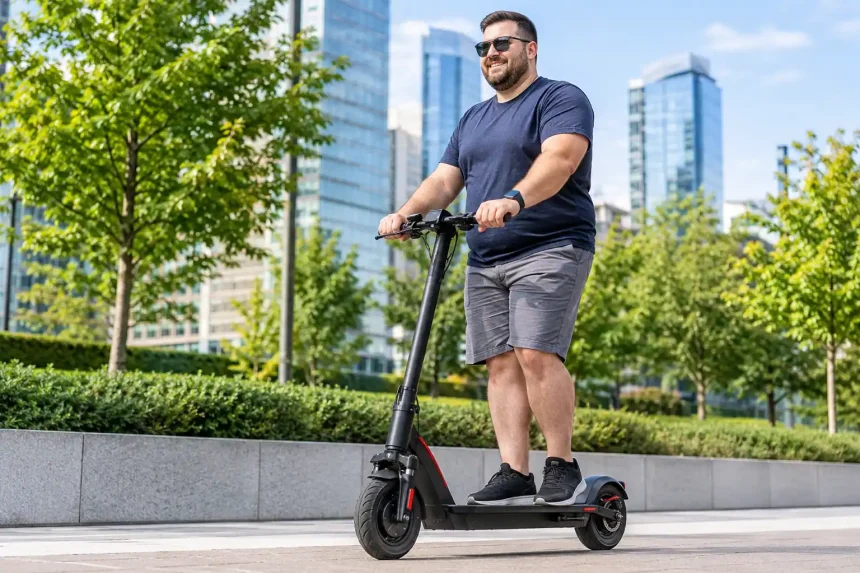
If you weigh around 300 pounds, shopping for an electric scooter can feel frustrating. Many listings are vague about weight limits, and plenty of scooters that technically “support” 300 lbs struggle once you add hills, a backpack, or a long ride. The goal isn’t just finding a scooter that won’t break. It’s finding one that feels stable, climbs without straining, and stops confidently.
This guide walks through what actually matters for a heavier rider, where the trade-offs are, and how to read a spec sheet with a critical eye.
Why the Listed Weight Limit Is Only the Starting Point
Every scooter has a maximum rider weight set by the manufacturer. That number is the first filter, and you should confirm it on the manufacturer’s official product page rather than relying on a retailer listing or a marketplace description, which can be copied or out of date.
But a weight limit is a ceiling, not a promise of good performance. A scooter rated for exactly 300 lbs may carry you, yet feel slow on inclines, drain its battery quickly, or flex over bumps. Riders near the limit generally put more stress on the motor, brakes, tires, and frame than someone well below it.
A practical rule many buyers follow is to look for a scooter whose stated capacity leaves some margin above your weight. Remember to count everything you carry: a laptop bag, a lock, groceries, or a helmet all add to the total load.
Motor Power and Hill Climbing
Motor power is usually listed in watts, and it matters more for heavier riders than for anyone else. A larger load asks more of the motor, especially on hills and when accelerating from a stop.
When comparing options, look at:
- Rated (nominal) power versus peak power. Peak figures are momentary bursts. The nominal rating is a better sign of sustained performance.
- Single versus dual motors. Dual-motor scooters generally spread the work across two motors, which can help on slopes, though they typically cost more and use more battery.
- The manufacturer’s stated climb ability. Treat any hill-grade claim as a best-case figure. Your results will vary with your weight, the steepness, and the length of the hill.
If your route is mostly flat, you can prioritize other features. If you live somewhere hilly, motor strength should rank near the top of your list.
Battery Capacity and Realistic Range
Advertised range is usually measured under ideal conditions, often with a lighter rider, a flat surface, and a moderate speed. A 300-lb rider should expect to get noticeably less than the headline number.
Battery capacity is typically listed in watt-hours (Wh). Higher capacity generally means more range, but it also means more weight and a longer charging time. Several things reduce real-world range:
- Rider weight and any cargo
- Hills and rough surfaces
- Higher riding speeds
- Cold weather, which can reduce battery performance
- Low tire pressure
- An aging battery
A sensible approach is to figure out your typical daily distance, then choose a scooter with a comfortable cushion beyond it. That way you aren’t constantly riding near empty, which is also harder on the battery over time.
Brakes, Tires, and Suspension
These three features often decide whether a scooter feels reassuring or nerve-wracking at your weight.
Braking. More weight means more momentum, so stopping power deserves close attention. Many heavier-duty scooters use disc brakes, sometimes alongside electronic braking. Check whether the brakes are mechanical or hydraulic, and plan to inspect and adjust them regularly.
Tires. Pneumatic (air-filled) tires usually provide more grip and cushioning, but they can puncture and need regular pressure checks. Solid or tubeless-style tires reduce flat worries but can feel harsher, depending on the design. Keeping pneumatic tires properly inflated matters even more at higher loads, since low pressure hurts both range and handling. Follow the pressure range in your owner’s manual.
Suspension. Front, rear, or dual suspension can make a real difference on cracked sidewalks and uneven pavement. Suspension systems are not all equal, though, and softer setups can bottom out more easily under a heavy load. If possible, read owner feedback from riders in your weight range, not just general reviews.
Deck Size, Frame, and Stability
A wider, longer deck lets you stand with your feet apart and your weight balanced, which tends to feel more stable. Cramped decks force an awkward stance and can be tiring on longer rides.
Pay attention to build quality too. Look for:
- A sturdy frame, commonly aluminum or steel, with solid welds
- A stem and folding mechanism that feel tight, with no wobble
- Larger wheels, which often roll over obstacles more smoothly
- A good handlebar height so you aren’t hunched over
Folding mechanisms deserve extra scrutiny. They are a common point of wear on any scooter, and they carry more stress on a heavier rider. A scooter that folds easily is convenient, but a secure latch matters more than saving a few seconds.
The Portability Trade-Off
This is where many buyers have to make a real decision. Scooters built to handle heavier riders, longer range, and rougher roads are usually heavier themselves, often considerably so.
If you need to carry your scooter up stairs, onto a train, or into a car trunk, weight becomes a daily concern. If you can roll it into a garage or ground-floor entry, a heavier, sturdier model is easier to live with. Be honest about how you’ll actually use it before choosing between a lighter scooter and a more rugged one.
Matching the Scooter to How You Ride
Short neighborhood and city trips. Moderate range and a comfortable deck may be enough. Portability and easy storage can matter more than maximum power.
Daily commuting. Prioritize reliable brakes, a battery with extra range beyond your commute, and tires that handle varied pavement. Think about where you’ll charge it, too.
Hilly areas. Motor strength and braking come first. A dual-motor design may be worth considering.
Recreational and longer rides. Look at battery capacity, suspension, and deck comfort. A seated model can make longer trips easier for some riders, though seated scooters are generally larger and less portable.
Safety, Maintenance, and the Law
Before every ride, give the scooter a quick check: tire pressure, brake response, a tight stem and folding latch, and a secure battery. Charge using only the charger supplied with your scooter, and follow the manufacturer’s guidance on charging and storage. A helmet and lights are sensible additions, particularly if you ride near traffic or after dark.
Rules for electric scooters differ widely across the United States. Speed limits, where you can ride (roads, bike lanes, sidewalks), age requirements, and helmet rules vary by state, and many cities add their own regulations. Check your state and local requirements before you buy, since they may affect which type of scooter is practical for you.
Questions to Ask Before You Buy
- Does the manufacturer’s official page confirm the maximum rider weight?
- How much margin is there between my weight (plus gear) and that limit?
- Is the range realistic for my route once I account for my weight and terrain?
- Do the brakes and tires inspire confidence at my weight?
- Can I handle the scooter’s own weight when I need to move or store it?
- What does the warranty cover, and is replacement support available in the US?
Final Thoughts
The right scooter for a 300-lb rider comes down to margin and match. Choose one with a weight rating comfortably above your load, a motor and battery sized for your actual route, and brakes and tires you trust. Then confirm the details with the manufacturer and your local laws. Taking an extra hour to compare specifications and read feedback from heavier riders can save you from a purchase that looks good on paper but disappoints on the road.