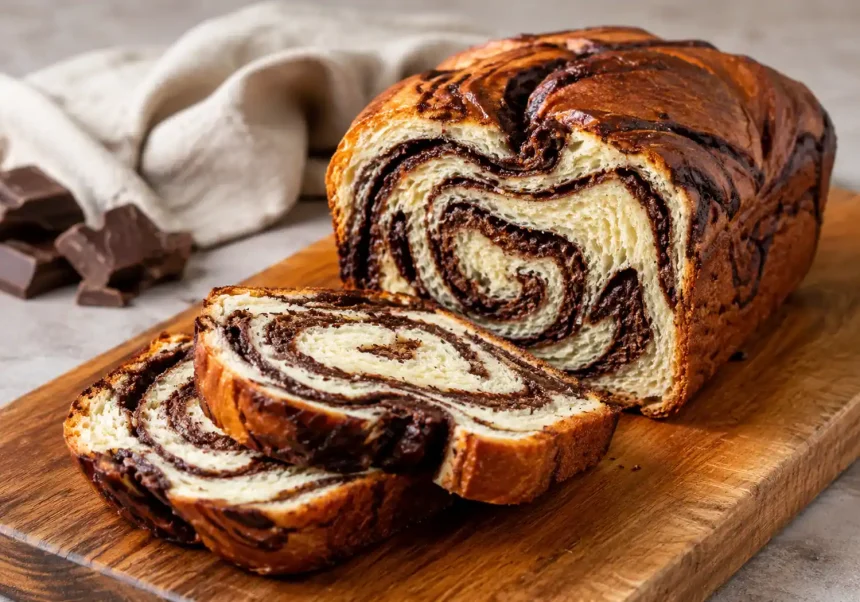
There’s something undeniably comforting about slicing into a freshly baked loaf and revealing a beautiful chocolate swirl winding through each piece. A loaf with a chocolate swirl strikes the perfect balance between a simple vanilla cake and a decadent chocolate dessert—it delivers just enough richness without overwhelming the palate. Whether you are a seasoned baker or someone who only occasionally dusts off the mixing bowls, this recipe deserves a permanent spot in your collection. The marbled effect looks impressive, yet the technique is surprisingly straightforward, making it an ideal choice for both everyday indulgence and special occasions.
What Makes a Chocolate Swirl Loaf So Irresistible
The appeal of a chocolate swirl loaf lies in its dual-flavor personality. One bite gives you the buttery warmth of vanilla-scented crumb, while the next delivers a hit of deep cocoa richness. This contrast keeps every mouthful interesting, which is why a single slice rarely feels like enough.
Texture plays an equally important role. A well-executed loaf should be moist and tender, with a crumb that holds together without being dense. The swirl itself contributes to this textural experience—when done correctly, the chocolate ribbons remain slightly fudgy, creating pockets of concentrated flavor that melt on the tongue. Unlike layer cakes that rely on frosting for moisture, this loaf stands entirely on its own merits.
Another reason this style of baking has endured across generations is its versatility. A chocolate swirl loaf works just as beautifully on a breakfast table alongside a cup of coffee as it does plated with a dusting of powdered sugar for dessert. It travels well, freezes beautifully, and tends to disappear quickly at potlucks and gatherings.
Key Ingredients That Guarantee a Moist Loaf
The Role of Fat in Tenderness
The foundation of any moist loaf begins with fat. Unsalted butter, softened to room temperature, creates a rich base while allowing you to control the salt content precisely. When creamed properly with sugar, butter traps air that expands during baking, giving the loaf its delicate structure. Some bakers prefer using oil instead, which can yield an even moister crumb since oil remains liquid at room temperature. A combination of both—butter for flavor and oil for moisture—often produces the best results.
Choosing the Right Dairy Component
Sour cream, buttermilk, or full-fat yogurt all serve a critical function beyond adding liquid to the batter. Their acidity reacts with leavening agents to produce a finer, more tender crumb. They also contribute fat and body, which translates directly to moisture retention. If your previous loaf attempts have turned out dry, switching from regular milk to one of these cultured dairy options might be the single change that transforms your results.
The Chocolate Element
For the swirl itself, you have options. Unsweetened cocoa powder blended with a small amount of melted butter and sugar creates a paste that ribbons cleanly through the batter. Semi-sweet or dark chocolate melted directly into a portion of the batter offers a richer, more indulgent approach. Whichever route you choose, quality matters. Since the chocolate swirl carries so much of the loaf’s identity, using a cocoa powder or chocolate you genuinely enjoy eating will make a noticeable difference.
Step-by-Step Technique for a Perfect Swirl
Preparing the Batter
Start by creaming your butter and sugar together until the mixture turns pale and fluffy—this typically takes three to five minutes with an electric mixer. Rushing through this step compromises the loaf’s texture. Add eggs one at a time, ensuring each incorporates fully before adding the next. Alternate between adding your dry ingredients and your dairy component, beginning and ending with the flour mixture. This method prevents overmixing, which can develop too much gluten and result in a tough loaf.
Creating the Chocolate Component
Once your base batter is ready, separate roughly one-third of it into a different bowl. Into this smaller portion, fold your cocoa mixture or melted chocolate until uniformly combined. The two batters should have similar consistencies to ensure they swirl together cleanly rather than bleeding into each other. If the chocolate batter appears significantly thicker, thin it with a tablespoon of warm milk.
Mastering the Swirl Technique
Pour half of the vanilla batter into your prepared loaf pan, spreading it evenly. Drop spoonfuls of the chocolate batter across the surface, then cover with the remaining vanilla batter. Add the rest of the chocolate batter in dollops on top. Now comes the artistic part: take a butter knife or skewer and draw it through the batter in a figure-eight motion, reaching down to the bottom of the pan. The key is restraint—no more than six to eight passes. Over-swirling blends the two batters into a uniform muddy color, erasing the distinct ribbons that make this loaf visually striking.
Common Mistakes and How to Avoid Them
One frequent pitfall involves the chocolate swirl sinking to the bottom during baking. This usually happens when the chocolate batter is significantly denser than the vanilla base. Ensuring similar consistency between the two batters solves this problem almost entirely.
Another issue bakers encounter is a dry or crumbly texture. Overbaking remains the primary culprit. Start checking your loaf five to seven minutes before the recipe’s suggested baking time ends. A toothpick inserted into the center should emerge with a few moist crumbs attached—not completely clean, which signals overbaking, and not wet with batter.
The third common mistake involves cutting into the loaf too soon. Allowing it to cool in the pan for at least fifteen minutes before transferring to a wire rack gives the crumb structure time to set. Slicing while the loaf is still hot causes it to crumble and compress.
Variations to Try Once You Have Mastered the Classic
Espresso-Enhanced Chocolate Swirl
Adding a teaspoon of instant espresso powder to the chocolate portion intensifies the cocoa flavor without making the loaf taste like coffee. This trick, beloved by professional bakers, deepens the chocolate notes beautifully.
Orange and Dark Chocolate Combination
Zest from one large orange folded into the vanilla batter pairs wonderfully with a dark chocolate swirl. The bright citrus notes cut through the richness and add a sophisticated flavor dimension.
Nutty Add-Ins
Toasted walnuts, pecans, or hazelnuts scattered between layers of batter add welcome crunch and nuttiness. For best results, toast the nuts beforehand to amplify their flavor and ensure they stay crisp within the moist crumb.
Storage Tips to Maintain Freshness
A chocolate swirl loaf stored properly remains moist for several days. Wrap it tightly in plastic wrap once completely cooled, then keep it at room temperature away from direct sunlight. For longer storage, the loaf freezes exceptionally well. Double-wrap in plastic followed by aluminum foil and freeze for up to three months. When ready to enjoy, thaw overnight in the refrigerator and bring to room temperature before serving. Individual slices can also be frozen separately for convenient single-serving access.
Frequently Asked Questions
Can I use a different type of pan?
Absolutely. While a standard 9-by-5-inch loaf pan produces the classic shape, you can divide the batter into mini loaf pans for gifting or use a bundt pan for a more dramatic presentation. Adjust baking times accordingly—smaller pans require less time, while bundt pans may need a few extra minutes.
Why did my swirl turn out faint?
Faint or barely visible swirls typically result from overmixing during the marbling step. Remember that less is more when dragging your knife through the batter. Additionally, using a lighter-colored cocoa powder or insufficient chocolate in the swirl portion can reduce contrast.
Can this recipe be made dairy-free?
Yes. Substitute the butter with a neutral-flavored oil or plant-based butter alternative, and replace the dairy component with a non-dairy yogurt or thinned coconut cream. The texture may differ slightly, but the loaf will remain moist and delicious.
Written by a home baking enthusiast with over a decade of recipe development experience, focused on approachable techniques that deliver bakery-quality results.