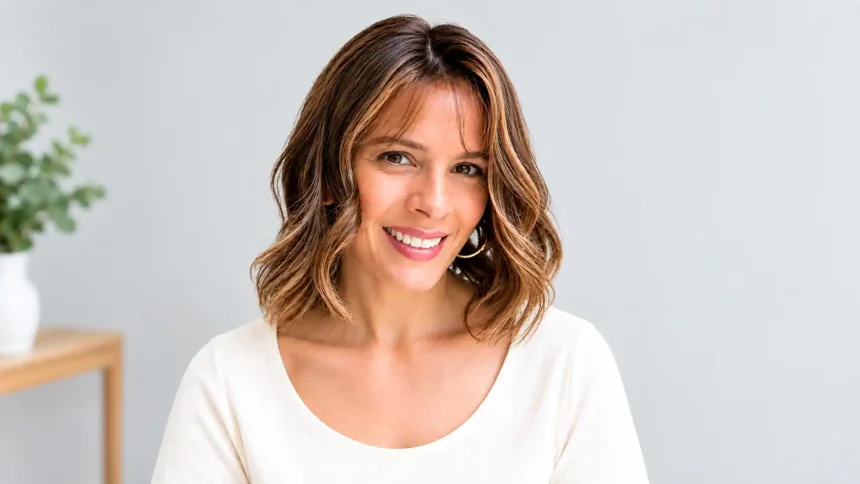
A hair topper can add volume and coverage to areas where your natural hair has become thinner. But getting the right shape is just as important as choosing the right base size or color. For some people, adding bangs can make the front of a topper blend more naturally with their own hair and create a softer overall style.
If you are considering cutting bangs into a topper yourself, however, it is worth thinking about a few things before picking up the scissors. Hair behaves differently depending on its length, texture, density, and styling, and a small mistake can be difficult to reverse.
So, should you cut bangs on your topper? Here is what to consider before making the first cut.
Why Add Bangs to a Hair Topper?
Bangs are not simply a hairstyle choice. They can also change how a topper blends into your natural hair.
For example, if you are concerned about thinning around the front hairline, bangs can help create additional coverage in this area. They can also soften the transition between the topper and your own hair, particularly when the front edge is difficult to blend.
For women experiencing frontal thinning or a receding hairline, this can be especially useful. Instead of trying to make the front edge completely disappear, a fringe or soft bang style can become part of the hairstyle.
Do You Need to Cut Your Topper Yourself?
Not necessarily.
Many hair toppers for women are available in different styles, lengths, and base designs, and some already come with bangs. Choosing a topper that has the look you want can save you from making permanent changes at home.
This can be a particularly good option if you have never cut alternative hair before. Unlike natural hair, a topper can be expensive to replace, so experimenting with scissors is not always the best place to start.
If you already own a topper without bangs, though, a professional stylist can often customize the front to suit your preferred hairstyle.
What to Consider Before Cutting Bangs
Before deciding whether to DIY, look at the following factors.
1. The Length You Want
Think about your desired finished length before cutting anything.
Remember that hair can look different after it has been washed, dried, or styled. If you cut directly to your final desired length, there may be very little room to correct the result.
A safer approach is to leave the hair slightly longer at first. You can always remove more length later.
2. Your Face Shape and Hairstyle
Not every bang style creates the same effect.
Blunt bangs can give you a more defined, structured look, while wispy or side-swept bangs tend to feel softer and lighter. Curtain bangs can also be an option if you want the front pieces to frame your face rather than create a solid fringe.
Instead of choosing a style simply because it looks good in a photo, consider how it will work with your existing haircut and the amount of coverage you need.
3. The Density of the Topper
The amount of hair in the front section also matters.
If you remove too much hair while creating bangs, the front may end up looking thinner than you intended. On the other hand, leaving too much density in the bang area can make the style look heavy.
This is one reason professional customization can be helpful, especially for human hair toppers, which can usually be cut and styled in a variety of ways.
4. How the Topper Will Be Positioned
Your topper’s position can affect the final appearance of the bangs.
A piece placed slightly farther forward may create more frontal coverage, while positioning it farther back can change where the bangs fall. Secure the topper in the position where you normally wear it before deciding where the hair should be cut.
This is particularly important if you use clips or another attachment method that determines the topper’s placement.
If You Decide to DIY, Start Slowly
If you are comfortable cutting hair and want to customize your topper at home, take a conservative approach.
Start by securing the hair topper firmly and separating the section you want to turn into bangs. Use proper hair-cutting scissors rather than household scissors, and work on completely dry hair so you can see its actual length.
Instead of making one straight, large cut, remove small amounts gradually. Check the shape from different angles as you go, and stop frequently to see how the bangs look with the topper in its normal position.
One of the most important rules is simple: cut less than you think you need to.
You can always shorten the hair later. You cannot put the length back once it has been cut.
When Is It Better to See a Stylist?
DIY customization may sound simple, but it is not always easy to get the right shape on the first attempt.
Consider working with a stylist if:
- You are unsure which bang style suits your face.
- Your topper is made from high-quality human hair and you do not want to risk damaging it.
- You need the bangs to blend with an existing haircut.
- You want layers or face-framing pieces rather than a simple fringe.
- Your topper has a lace front or delicate construction that requires careful handling.
A stylist who has experience working with alternative hair can also help you determine how much hair should be removed without compromising the overall density of the piece.
What If You Want a Topper With Bangs Without Cutting It?
If you like the look of bangs but do not want to customize a topper yourself, pre-styled options may be worth considering.
Searching for hair toppers with bangs can give you a better idea of the styles available, from shorter fringe styles to softer, face-framing designs. This can also be a more convenient solution if you are new to toppers and want something that is ready to wear.
If you prefer shopping locally, searching for hair toppers near me can help you find salons, alternative-hair specialists, or retailers where you may be able to see different styles in person before making a decision.
Seeing a topper in person can also make it easier to compare color, density, base construction, and bang length.
Human Hair or Synthetic: Does It Matter?
It can.
Human hair toppers generally offer more flexibility when it comes to cutting, heat styling, and creating a customized look. Because the hair behaves more like natural human hair, a stylist can typically work with it in much the same way they would with a regular haircut.
Synthetic hair, on the other hand, may have more limitations when it comes to heat styling or significant customization. Always check the care and styling instructions for the specific topper before cutting or applying heat.
The Bottom Line
Adding bangs can be a great way to change the look of a topper and create additional coverage around the front of the head. But that does not mean you have to cut your hair topper yourself.
If you are confident with scissors and only want a small adjustment, taking your time and cutting gradually can help reduce the risk of mistakes. If you want a more complicated style or are working with an expensive topper, professional customization is usually the safer choice.
And if you are just starting to explore toppers, choosing a ready-made style may be the easiest option. There are plenty of hair toppers for women designed for different hair-loss patterns, coverage needs, and styling preferences, so you do not necessarily have to customize a piece to get the look you want.