
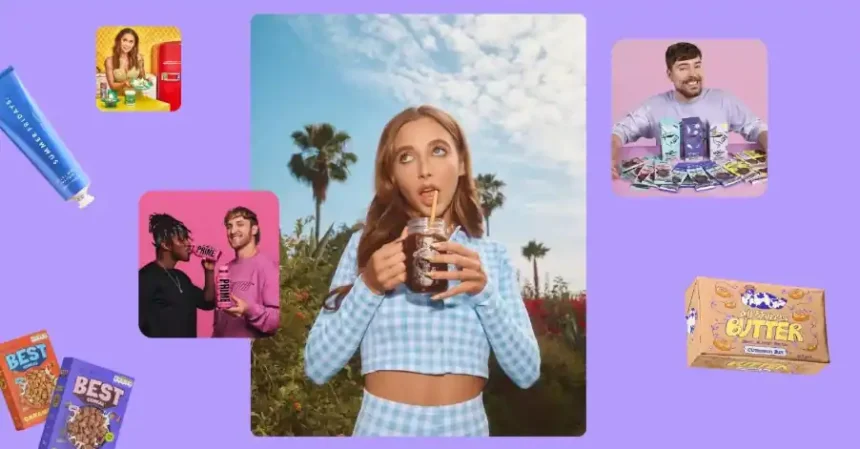
Not too long ago, building a successful brand required deep pockets, a polished advertising strategy, and distribution relationships that took years to nurture. Today, a smartphone, a distinct personality, and a loyal audience can achieve something remarkably similar, often faster and sometimes even better. Welcome to the era of creator-led brands, where influence is no longer rented through advertising but owned through community.
Scroll through TikTok for a few minutes and you will notice something fascinating.They are launching them. Beauty lines sell out overnight, wellness products gather waitlists before production begins, and fashion labels emerge from what once looked like casual outfit videos. The creator economy has matured into something far more powerful than sponsored posts. It has evolved into a new model of entrepreneurship.
Consumers are responding because these brands feel personal. Instead of encountering a distant corporation, buyers feel like they are supporting someone whose journey they have watched unfold in real time. That emotional proximity changes how trust is built, how products are discovered, and ultimately how loyalty forms.
Let us explore why creator-led brands are reshaping the marketing landscape and why traditional strategies are struggling to keep up.
From Content Creator to Founder
The shift from influencer to founder is not accidental. It is the natural progression of digital authority. Creators spend years understanding their audience. They learn what excites them, what frustrates them, and what problems remain unsolved. Traditional companies invest millions in research to gather similar insights, yet creators often possess this knowledge organically through daily conversations in comments, livestreams, and direct messages.
Consider a skincare creator who repeatedly hears followers complain about overly complicated routines. Instead of waiting for an established brand to simplify things, the creator launches a minimal skincare line designed around clarity and convenience. The product is not built from abstract data. It is shaped by lived interaction. This closeness produces something rare in modern marketing: immediate relevance.
Another advantage lies in narrative. When a creator launches a brand, the origin story already exists. Followers know the experiments, the failures, the prototypes, and even the late-night brainstorming sessions. By the time the product appears, the audience feels emotionally invested.
Traditional brands often attempt to manufacture authenticity through storytelling campaigns. Creator-led brands simply continue a story that audiences already believe.
Influencer-Brand Synergy Is Becoming a Science
As creator businesses scale, partnerships are becoming more strategic and less transactional. Gone are the days when sending free products guaranteed meaningful exposure. Today’s collaborations resemble carefully engineered ecosystems.
Many emerging founders now rely on a strategic TikTok marketing partnership guide to evaluate which creators align with their brand voice, audience demographics, and long-term vision. Instead of chasing vanity metrics such as follower count, they focus on resonance. A smaller creator with deeply engaged followers frequently drives stronger conversions than a massive but passive audience.
This structured approach signals a major shift. Creator-led companies are not operating on instinct alone. They are adopting frameworks once reserved for established marketing departments while preserving the agility that makes them unique.
The synergy works both ways. Partner creators gain credibility by associating with a founder who understands the platform culture. The brand gains reach without appearing intrusive. To viewers, the collaboration feels less like advertising and more like a natural extension of the content they already enjoy. What emerges is a form of marketing that blends entertainment, education, and commerce seamlessly.
TikTok-Native Entrepreneurs Are Rewriting the Playbook
TikTok has become fertile ground for entrepreneurial experimentation because its algorithm rewards originality rather than legacy status. A thoughtful product explanation filmed in a bedroom can outperform a glossy studio advertisement.
Beauty founders often demonstrate formulations live, inviting feedback before finalizing production. Fashion creators test designs through outfit styling videos and measure interest through comments and shares. Wellness entrepreneurs explain the science behind their products in approachable language, transforming complex topics into digestible stories.
This transparency removes the mystery that once surrounded product development. Buyers no longer wonder how something was made because they witnessed the process.
Another reason TikTok-native brands thrive is speed. If a color palette starts gaining attention or a particular ingredient becomes popular, creator founders can adapt almost immediately.
Traditional companies, constrained by layered approvals and lengthy production cycles, rarely move at this pace.
Trust Is the New Currency
Marketing once depended heavily on persuasion. Today, it depends far more on credibility. When followers watch a creator decline partnerships that do not align with their values, that consistency builds trust. When the same creator eventually introduces a personal product, audiences assume the same care guided its creation.
This phenomenon is often described as relational commerce. People buy because the recommendation feels like it comes from a knowledgeable friend rather than an impersonal billboard.
Transparency strengthens this bond even further. Creators frequently discuss pricing decisions, sourcing challenges, and manufacturing realities. Instead of weakening confidence, this openness humanizes the brand. Buyers appreciate being treated as insiders rather than targets.
Community Is the New Distribution Channel
Traditional marketing relies heavily on visibility. Creator-led brands rely on belonging. Communities built around creators function almost like living focus groups. Members share reviews, suggest improvements, and celebrate launches collectively. Each purchase becomes part of a shared experience rather than an isolated transaction. This dynamic dramatically reduces customer acquisition friction. Instead of convincing strangers, brands are serving people who already care. It also changes how products spread. A single enthusiastic review from a community member can inspire dozens of others to try the product. Word-of-mouth regains its power in a digital format.
Interestingly, this model mirrors something media production agencies often observe while building strong brand identities. Audiences gravitate toward narratives that feel participatory rather than imposed. When people see themselves reflected in a brand’s evolution, loyalty deepens naturally.
Challenges Creator-Led Brands Must Navigate
Despite the excitement, this path is not without obstacles. Mostly, authenticity is tested while scaling. Followers who loved the intimacy of early content may worry when production expands. Maintaining a personal connection while growing operations requires thoughtful communication.
Operational complexity is another hurdle. Manufacturing, logistics, compliance, and customer service demand expertise that extends beyond content creation. Many founders succeed by surrounding themselves with experienced partners while remaining the visible heartbeat of the brand.
Burnout is a quieter but equally real challenge. Running a company while sustaining a content presence can stretch even the most energetic creators. Sustainable pacing becomes essential. Yet those who manage these pressures often emerge with remarkably resilient businesses.
Conclusion
At the heart of this transformation lies a simple truth. People trust people more than they trust institutions. When founders share their journey openly, invite participation, and remain culturally fluent, marketing stops feeling like persuasion and starts feeling like conversation. For established companies, the rise of creator founders offers a valuable lesson. Authenticity cannot be staged indefinitely. It must be lived.
As commerce continues to intertwine with storytelling, the most successful brands will likely be those that feel less like corporations and more like communities with a recognizable human voice guiding the way.

