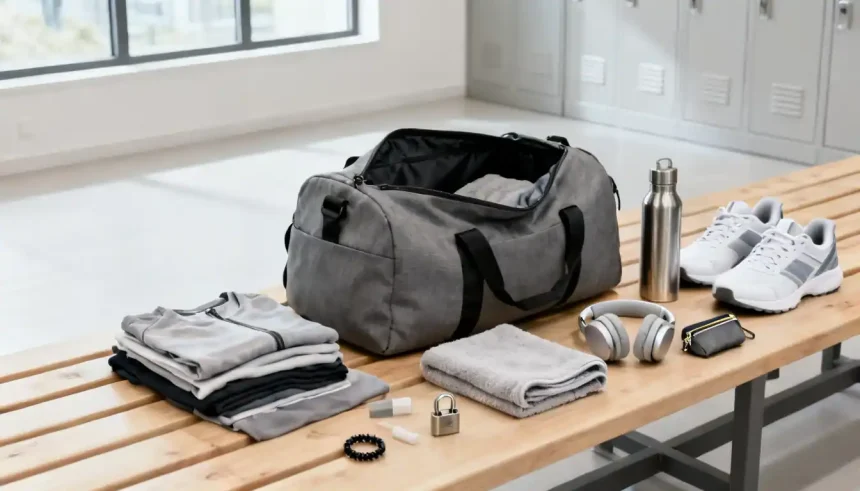
There’s a particular kind of frustration that comes with reaching into your gym bag and realising you’ve forgotten your towel, your socks, or — worst of all — your trainers. You’ve already paid for the session, you’ve carved time out of a busy day, and now you’re standing in a changing room trying to work out whether you can train in the shoes you wore on the train.
Packing a gym bag well isn’t about carrying everything you own. It’s about having a small, reliable set of items that cover your needs before, during, and after a workout — without turning your bag into a bottomless pit of clutter. Get it right once, and you can grab the same bag on your way out the door without a second thought.
Here’s what actually belongs in a gym bag, why each item matters, and how to keep the whole thing organised and smelling fresh.
What to Pack in a Gym Bag
The items below are the core of any gym bag, whether you’re heading to a weights session, a spin class, or a swim. Each one earns its place because it solves a real problem you’ll face at some point during your visit.
Workout Clothes
Your training kit is the heart of the bag. Pack a full set that you can change into: a top, a bottom layer, and underwear. Choose fabrics that wick sweat rather than plain cotton, which tends to stay damp and feel heavy against your skin once you start working hard. Shorts, leggings, or joggers all work — pick whatever you’re comfortable training in.
It’s worth packing your clothes the night before when you can think clearly, rather than five minutes before you leave. That way you won’t end up with a mismatched or missing layer.
Gym Trainers
A separate pair of clean gym trainers is often a good idea. Many gyms in the UK have policies requiring clean indoor trainers, particularly in areas with wooden floors or where people train barefoot. A dedicated pair keeps dirt, grit, and street water out of the gym and protects your everyday shoes from the wear and smell of training.
If you train across different disciplines — lifting, running, classes — you might eventually want more than one pair, but one well-chosen, supportive pair is plenty to start with.
Socks
Socks are the item people forget most often, and training without them is genuinely unpleasant. Blisters, sweaty trainers, and sore feet are all easy to avoid with one spare pair. Pack two if you can: one for your session and a fresh pair to change into afterwards.
Towel
Most gyms will direct you to wipe down equipment after use, and a towel is often required by gym etiquette or house rules. A small sweat towel for your workout is the minimum. If you plan to shower afterwards, you’ll also want a larger towel. A quick-drying microfibre towel is lighter and takes up less room, but any clean towel does the job.
Water Bottle
Staying hydrated changes how you feel during a session more than almost anything else. A reusable bottle means you can fill up at the gym’s water fountains rather than paying for bottled water each visit. Choose one that seals properly — a leak in your bag can ruin everything else inside, as plenty of people have learned the hard way.
Toiletries
A small toiletry kit turns a rushed session into a comfortable one, especially if you’re heading to work or meeting someone afterwards. Useful basics include:
- Shower gel or soap
- Shampoo (if you wash your hair at the gym)
- A small travel towel
- A comb or brush
- Any personal care items you’d normally use at home
Keep these in a small wash bag so they don’t spill or scatter through the rest of your kit.
Deodorant
A quick application after a shower — or even just after changing — makes a real difference to how you feel for the rest of the day. A compact roll-on or spray takes up almost no space and is one of the simplest things to keep permanently in your bag.
Headphones
For many people, a good playlist or podcast is what gets them through a tough session. Wireless headphones are the practical choice, since a trailing cable can get in the way while you move or lift. Keep them charged at home so they’re ready when you are — a dead battery halfway through a workout is its own small frustration.
Post-Workout Clothes
If you’re not going straight home, pack something clean to change into. Even if you’re heading home, having a fresh set can make the journey more comfortable, particularly after a heavy session in cold or wet UK weather. Layer for the season, and keep a spare set in the bag during winter when sweaty clothes against cold air can leave you feeling chilled.
Small Personal Items
A few small things are easy to overlook but hard to manage without:
- A padlock, if your gym uses lockers that require your own
- A hair tie or headband if you have longer hair
- Plasters for minor grazes, especially if you lift or climb
- Hand sanitiser for before and after your session
Phone and Charger
Your phone is how you follow a workout plan, track your session, or listen to music, so you’ll have it with you anyway. A small portable charger is worth adding if you tend to arrive with a low battery, though it’s not something everyone needs every visit.
Snacks
A small snack — a piece of fruit, a cereal bar, or a handful of nuts — is useful if you train for a long time or if you won’t be home for a while. It’s not a necessity for a short session, but for longer workouts it can stop an energy dip. Keep it simple and, ideally, something that won’t get crushed at the bottom of your bag.
Gym Bag Essentials for Beginners
If you’re new to the gym, it’s easy to overpack because you’re not yet sure what you’ll need. The good news is that a beginner’s bag can be remarkably light.
As a starting point, you genuinely need these items:
- One set of workout clothes
- Trainers
- A towel
- A water bottle
- Toiletries and deodorant if you’ll shower
- A padlock if your gym requires one
That’s really it. You don’t need lifting straps, a shaker bottle full of supplements, resistance bands, a foam roller, or specialist gear on day one. Most of that can wait until you know what your routine actually involves.
The main differences for a beginner come down to a few practical touches. Wear something you’re comfortable and confident moving in rather than anything technical. Check your gym’s rules on footwear and towels before your first visit so you don’t arrive unprepared. And set a simple routine — packing your bag the night before goes a long way when you’re still building the habit of going at all.
Leave at home anything you can’t name a specific use for. A heavy, overstuffed bag is more of a deterrent than a help when you’re just getting started.
How to Keep Your Gym Bag Organised
An organised bag isn’t about being tidy for its own sake — it means you can find your headphones, padlock, and towel in seconds without upending everything onto a bench.
Start by using a bag with a few separate compartments. A main section for clothes, a separate shoe pocket or compartment, and smaller pockets for keys, phone, and toiletries will save you a lot of rummaging. If your bag has a dedicated shoe area, use it; trainers carry dirt and should never sit loose against your clean clothes.
Use small pouches or bags for the things that tend to get lost: toiletries in one, chargers and cables in another, valuables in a third. Keep frequently used items — towel, water bottle — near the top or in external pockets so you can reach them quickly.
A useful habit is to keep some items permanently in the bag rather than repacking everything each time. Deodorant, a spare padlock, plasters, and a hair tie can simply live there, which removes several decisions from every trip.
Finally, unpack the bag when you get home rather than leaving it sitting ready. It feels counterintuitive, but airing the bag and swapping used kit for clean kit means the bag is genuinely ready — and not growing stale — by the time you next need it.
Gym Bag Hygiene Tips
A gym bag that spends its life holding damp, sweaty clothes will eventually smell, and that smell can transfer to whatever you pack next. A little routine can go a long way towards preventing this.
The single most important habit is to remove sweaty clothes as soon as you get home. Air them out or put them in the wash, but never leave them balled up in the bag overnight. It’s the quickest way to ruin both the clothes and the bag.
Consider keeping a separate drawstring bag or reusable pouch for used gear. This keeps damp clothes from touching your clean items while you’re still at the gym, and it makes taking everything to the wash much easier.
Your trainers deserve the same attention. Let them air out rather than sealing them into a compartment while still warm and damp.
For the bag itself, wipe down the inside and outside occasionally and leave it open to air between uses. Check the manufacturer’s care instructions before doing anything more thorough, since some bags can be machine washed while others should only be sponge-cleaned. A small odour-absorbing sachet can also help, though the simplest fix is just regular airing and prompt unpacking.
What Not to Pack in Your Gym Bag
It’s just as useful to know what to leave out. Some items add weight and clutter without earning their place.
Valuables you don’t need. Avoid carrying anything expensive that you can leave at home or in the car. Even with a padlock, gym lockers aren’t a place to leave watches, large amounts of cash, or jewellery.
Every possible piece of kit. Unless your session genuinely calls for it, leave the extra gear at home. Carrying straps, bands, and rollers “just in case” usually just makes the bag heavier and harder to find things in.
Too many toiletries. A full-sized shampoo bottle, a hair dryer, and half your bathroom cabinet are more than most people need. Travel-sized options do the same job in a fraction of the space.
Bulky food and drinks. A full meal and a giant jug of a supplement drink are rarely necessary. A modest snack and a single water bottle cover most sessions.
Books, tablets, and heavy reading material. If you’re not genuinely going to use them, they’re dead weight.
The principle is simple: if you can’t say what you’ll use an item for on this visit, it probably doesn’t need to come.
Gym Bag Checklist
Use this as a quick check before you leave home. Not every item applies to every trip — it’s a prompt, not a rule.
Basics
- Workout top and bottoms
- Underwear
- Trainers
- Socks (one pair to train in, one spare)
- Sweat towel (plus a shower towel if you’ll wash)
Toiletries
- Shower gel or soap
- Shampoo
- Deodorant
- Comb or brush
- Any personal care items
Day-to-day items
- Water bottle
- Headphones (charged)
- Phone and charger
- Padlock
- Hair tie or headband
- Plasters
After the session
- Fresh clothes to change into
- Small snack if you’ll be out for a while
If you keep the smaller items — deodorant, padlock, plasters — stored permanently in your bag, the checklist shrinks to just clothes, towel, bottle, and a few extras each time.
Frequently Asked Questions
What should a beginner pack for their first gym session?
Keep it simple: a set of workout clothes, trainers, a sweat towel, a water bottle, and toiletries if you plan to shower. Add a padlock if your gym requires one. That’s enough to get started, and you can refine your bag as your routine develops.
Do I really need separate gym trainers?
A separate pair of clean gym trainers is often a good idea. Dedicated trainers keep dirt off gym floors, align with many gyms’ footwear policies, and stop your everyday shoes absorbing sweat and odour. A single clean, supportive pair is enough for most people.
Is a towel actually required at the gym?
Many gyms expect members to bring a towel, particularly for wiping down equipment after use. Policies vary between gyms, so it’s worth checking the rules before your first visit. A small sweat towel is useful for your workout, with a larger second towel if you plan to shower.
How do I stop my gym bag from smelling?
Take sweaty clothes out as soon as you get home and let them air or wash them promptly. Air the bag between uses, keep used gear in a separate pouch, and follow the manufacturer’s instructions for cleaning the bag itself. Small, consistent habits beat any single product.
What should I pack for a longer workout?
For longer sessions, add water (or a second bottle), a small snack to keep your energy up, and your phone charger if you rely on it for music or tracking. Consider an extra towel if you sweat heavily. You don’t need a dramatic extra load — just a few additions that support a longer time on the floor.
Should I leave my gym bag packed permanently?
A middle ground works best. Keep the small, always-needed items — deodorant, padlock, plasters — in the bag permanently. But take clothes, towels, and anything damp out after each visit so the bag can air and stay fresh for next time.
Can I bring my own lock to the gym?
Yes, and many UK gyms expect you to. Check whether your gym’s lockers take a padlock or have built-in locks before your first visit, so you’re not caught out at the locker bank.
Final Thoughts
A good gym bag does one thing well: it removes the small obstacles that can otherwise derail a session. You don’t need a huge haul of equipment or the latest accessories — just clean kit, the right footwear, a towel, water, and a few personal items that keep you comfortable before, during, and after.
The real trick is in the routine. Pack the night before, unpack and air the bag when you get home, and keep a handful of small essentials stored permanently so you’re never starting from scratch. Once that rhythm is in place, packing your gym bag stops being a chore and becomes something you barely have to think about — which leaves your energy for the workout itself.