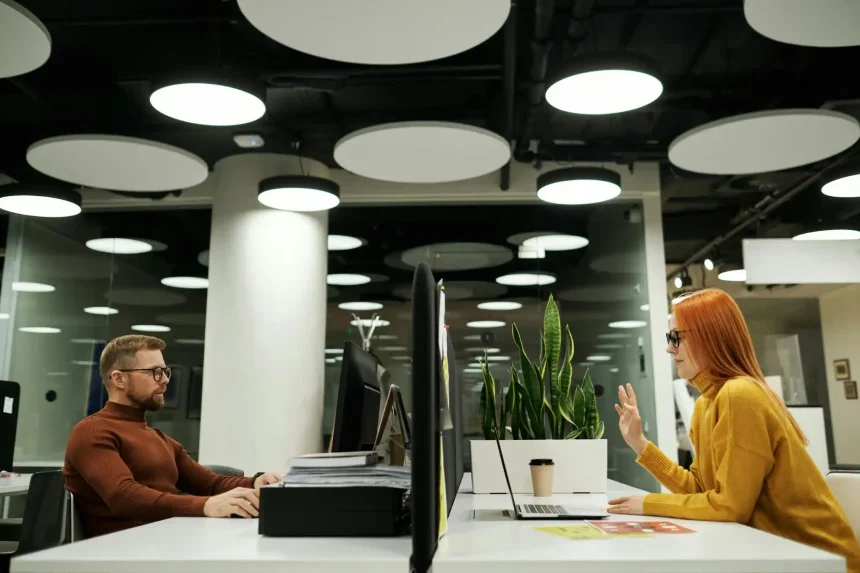
The modern office has undergone a radical transformation. Gone are the rows of cubicles, replaced by expansive, light-filled open plans designed to foster collaboration.
However, this architectural shift introduced a significant challenge: noise. From the hum of the espresso machine to the “Zoom fatigue” of a colleague three desks away, sound travels fast and lingers long.
In 2026, the priority for UK businesses has shifted from merely providing a desk to providing an environment where deep work is actually possible. Improving workplace acoustics isn’t just about peace and quiet; it’s about cognitive ergonomics and protecting your team’s mental bandwidth.
Why Workplace Acoustics Affect Employee Productivity
It takes an average of 23 minutes to return to a deep state of focus after being interrupted by a sudden noise. In a poorly treated open office, those interruptions happen dozens of times a day.
- Reduced Stress: Constant background chatter increases cortisol levels.
- Privacy Concerns: Employees often feel uncomfortable discussing sensitive projects in “echoey” spaces.
- Speech Intelligibility: In meeting rooms, poor acoustics make it difficult for remote participants to hear clearly, leading to “meeting fatigue.”
By investing in professional office acoustic solutions, businesses can reclaim lost hours of productivity and improve the overall well-being of their workforce.
Strategic Zones: Addressing Different Office Areas
Effective acoustic design doesn’t mean turning the office into a library. It means managing sound so it stays where it belongs.
1. The Open Plan Challenge
Open plan offices suffer from “sound flanking,” where noise bounces off hard floors and glass walls. The most effective way to combat this without building new walls is through the use of acoustic desk screens. These screens provide a localized sound buffer, absorbing speech at the source before it travels across the room.
2. Meeting Rooms and Video Conferencing
Glass-walled meeting rooms are aesthetic triumphs but acoustic nightmares. Without treatment, they become “echo chambers.” To fix this, high-performance acoustic wall panels are essential. They catch the sound waves that would otherwise bounce off the glass, ensuring that voices sound crisp and professional on digital calls.
3. Communal and Social Spaces
In breakrooms or coworking zones, you want a lively atmosphere without it becoming deafening. Suspended solutions like acoustic ceiling rafts or vertical acoustic baffles are perfect here. They take advantage of the unused “dead space” near the ceiling to soak up ambient noise.
Top Products to Enhance Workplace Acoustics in 2026
If you are looking to upgrade your space, several modern materials offer both high NRC (Noise Reduction Coefficient) ratings and stunning visual appeal.
- Acoustic Wall Panels: Available in various fabrics and geometries, these are the workhorses of sound absorption.
- Acoustic Ceiling Baffles: Ideal for industrial-style offices with exposed services. They hang vertically to break up sound paths.
- Recycled PET Panels: A favorite for eco-conscious firms, these are made from compressed plastic bottles and offer excellent durability.
- Acoustic Rafts: Horizontal panels that “float” from the ceiling, providing a sleek, architectural look while hiding messy cables.
The Rise of Sustainable and Eco-Friendly Acoustic Solutions
Modern UK businesses are increasingly focused on their ESG (Environmental, Social, and Governance) targets. Choosing sustainable acoustic panels is a double win: you improve the internal environment while reducing your external footprint.
Many of the leading solutions today utilize recycled PET acoustic panels. These are not only lightweight and easy to install but are also fire-rated and free from harmful chemical binders.
Using materials made from recycled plastic bottles allows architects to achieve LEED or BREEAM certifications while creating a healthier indoor air quality for staff.
How to Measure and Fix Poor Workplace Acoustics
You don’t need to guess where the noise problems are. Professional acoustic treatments usually follow a simple three-step process:
- Reverberation Time (RT) Testing: Measuring how long it takes for a sound to “die away.” High RT equals high echo.
- Product Selection: Choosing the right balance of wall-mounted and ceiling-suspended absorbers based on the room’s volume.
- Strategic Placement: Identifying “first reflection points”—the areas where sound hits first—to maximize the efficiency of every panel installed.
Modern Design Ideas for Hybrid Office Environments
In a hybrid world, the office has become a “destination” for collaboration. This means more people are in the office specifically to talk, making noise management even more critical.
- Acoustic Pods: Small, soundproof “phone booths” for private calls.
- Zoning with Furniture: Using high-back acoustic sofas to create semi-private meeting areas.
- Integrated Lighting: Combining LED strips with acoustic ceiling rafts to solve two design problems with one fixture.
Conclusion
Acoustics should never be an afterthought in office design. Whether you are managing a small startup or a massive corporate headquarters, the quality of the “soundscape” directly dictates the quality of the work produced.
By incorporating a mix of acoustic office panels, ceiling treatments, and desk-based solutions, you create a space where employees feel focused, valued, and energized.
For those looking for a deeper dive into the technical side of installation and material selection, be sure to check out this soundproof panels guide.
Frequently Asked Questions
1. What is the difference between soundproofing and sound absorption?
Soundproofing (insulation) prevents sound from traveling between rooms (e.g., blocking noise from a hallway). Sound absorption (acoustics) improves the sound quality inside the room by reducing echoes and reverberation.
2. How many acoustic panels do I need for my office?
As a general rule of thumb, you should aim to cover approximately 15% to 25% of the total wall or ceiling surface area with absorbent materials to notice a significant improvement.
3. Are acoustic panels easy to install?
Yes. Most modern acoustic wall panels can be installed using high-tack adhesives or simple clip systems, making them an ideal choice for quick office refreshes without the need for major construction.
4. Can I use acoustic panels in a glass-walled office?
While you can’t easily put panels on glass, you can use acoustic ceiling baffles or freestanding acoustic desk screens to absorb the sound that would otherwise reflect off the glass surfaces.
5. Are PET acoustic panels fire-safe?
Yes, most high-quality recycled PET panels are manufactured to meet strict UK fire safety standards (typically Class B-s1, d0 or Class A), making them safe for use in all commercial environments.