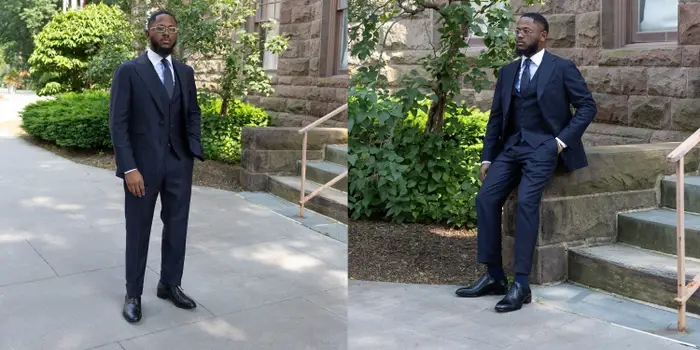
In an era of instant gratification and digital automation, the concept of waiting for something—of participating in a slow, deliberate process—has become a radical act of self-care. This is particularly evident in how we approach our wardrobes. While the convenience of “off-the-rack” shopping has its place, there is a growing movement toward a more intentional form of dressing. We are witnessing a return to the atelier, where the garment is not merely a product to be consumed, but a collaboration between a person and a craft.
This shift isn’t about vanity or a desire for status. Instead, it’s about the profound psychological comfort that comes from a perfect fit. When a garment is constructed around the unique topography of your own body, the relationship between the wearer and the clothes changes. You stop adjusting your posture to suit the fabric; the fabric begins to honor your posture. It is the transition from wearing a uniform to inhabiting an identity.
The Psychology of the Custom Fit
There is a subtle but undeniable shift in one’s internal state when stepping into a garment designed specifically for them. It is what stylists often call “sartorial grounding.” Unlike standard sizing, which forces the human form into a predetermined mold, personal tailoring starts with the individual. This precision eliminates the minor physical distractions—a pulling shoulder, a bunching waist, or a sleeve that’s a fraction too long—that subtly drain our mental energy throughout the day.
When these distractions vanish, confidence takes their place. It’s not a loud, performative confidence, but a quiet, centered one. You move with more fluidity because your clothes are no longer an obstacle. This sense of ease is a powerful tool in any social or professional setting; when you are entirely comfortable in your own skin (and your second skin), you are free to be more present, more creative, and more engaged with the people around you.
A Masterclass in Material and Detail
The journey into personal tailoring is also an education in materiality. It’s an opportunity to step away from the generic and explore the vast library of textile heritage. Brands like Suitsupply have democratised this experience, offering a seamless path to tailored suits that allow the individual to dictate everything from the weight of the Italian wool to the specific roll of the lapel. This level of customisation ensures that the final piece is not just a suit, but a reflection of the wearer’s specific lifestyle and aesthetic sensibilities.
The beauty lies in the granular choices. Perhaps it’s a specific shade of forest green for a winter wedding, or a lightweight hopsack weave for a summer in the city. Maybe it’s the choice of a functional “surgeon’s cuff” or a specific silk lining that remains hidden to the world but provides a private sense of luxury to the wearer. These details are the signatures of a life lived with intent. They transform a utilitarian item into a piece of functional art.
The Evolution of the Modular Wardrobe
One of the most practical benefits of investing in custom pieces is their inherent versatility. Because these garments are made to a higher standard of construction, they possess a structural integrity that allows them to be deconstructed. A custom-made jacket can be paired with denim for a relaxed dinner, while the trousers can be worn with a premium knit for a weekend brunch.
This modularity is the foundation of a modern, sustainable wardrobe. Rather than owning dozens of ill-fitting items, the contemporary approach favors owning a few exceptional pieces that can be styled in a multitude of ways. It’s a move toward “fewer, better things”—a philosophy that values longevity and craftsmanship over the rapid cycles of fast fashion. A tailored garment is built to be repaired, altered, and cherished for decades, not just a season.
The Human Connection to Craft
In a world where so much of our lives is mediated through screens, there is a deep satisfaction in the tactile, human-to-human interaction of a fitting. Discussing the break of a trouser or the width of a shoulder with a master of the craft is a grounding experience. It connects us to a lineage of tailoring that spans centuries, reminding us that quality takes time and that human hands are still the most sophisticated tools we possess.
This connection to the process makes the final garment more meaningful. You aren’t just wearing a brand; you are wearing a story that you helped write. You remember the fabric samples you touched, the adjustments made to the paper pattern, and the anticipation of the final fitting. This emotional resonance is what separates a favorite garment from a merely functional one.
A Legacy of Style
Ultimately, the choice to go custom is a choice to invest in yourself. It is an acknowledgement that your time, your comfort, and your presentation are worth the extra effort. It’s a way of practicing mindfulness in a busy world—taking the time to ensure that the image you project to the world is an honest and accurate reflection of who you are.
The tailored suit remains the gold standard of the male wardrobe not because it is traditional, but because it is effective. It is the ultimate expression of the “architectural” approach to life—building something that is beautiful, functional, and built to withstand the test of time. As we look toward the future of menswear, the move toward the personal and the precise is only growing stronger. In a sea of the generic, the custom-made remains a beacon of individuality and quiet excellence.