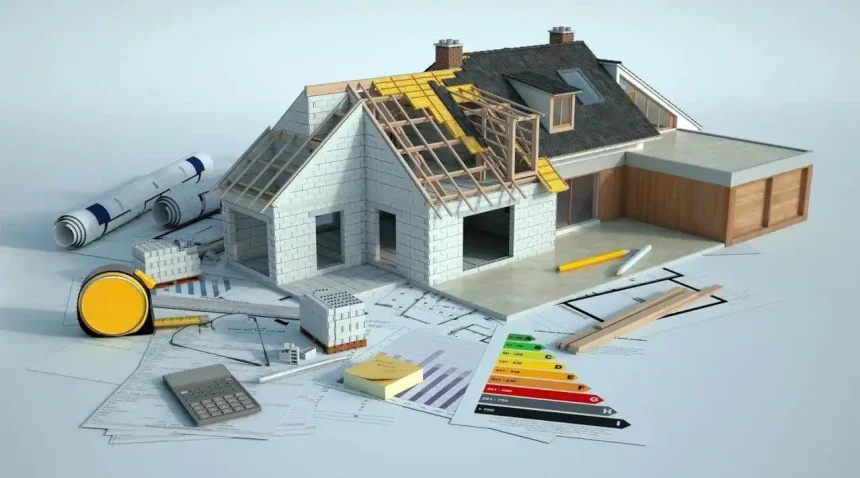
Modern cities are experiencing a quiet revolution in architecture and real estate. Office to residential conversion — the transformation of commercial spaces into living accommodation — has become one of the most pressing trends in urban development worldwide. And this is no passing fad: behind it lie profound economic, social, and environmental forces.
Why Are Offices Emptying
The COVID-19 pandemic permanently altered our relationship with the workplace. Millions of people shifted to remote or hybrid working and have shown little enthusiasm for returning to traditional offices. This shift has also increased demand for flexible workspaces such as Kings Club coworking, where professionals prefer shared, adaptable environments instead of long-term office leases. According to property research firms, vacancy rates in major European and North American cities surged sharply after 2020. In some business districts, one in four offices now sits empty.
This creates a striking paradox: those very same cities face an acute shortage of affordable housing, whilst office towers stand half-vacant. The answer, it seems, presents itself rather naturally.
How Does Conversion Work
The process of transforming an office into a residential building is considerably more complex than it might appear. Architects and developers encounter a host of technical challenges along the way.
Floor layouts. Office floors tend to be wide and open-plan — perfectly suited to large working spaces, but poorly adapted for flats that require natural light on all sides. The solution typically involves compact layouts with atriums or internal courtyards.
Building services. Ventilation, drainage, electrical supply — all of these must be redesigned almost from scratch. Office buildings were engineered for an entirely different pattern of use and occupancy load.
Regulations and planning permission. In most countries, residential properties must meet considerably stricter standards — ceiling heights, sound insulation, natural light requirements. Obtaining permission for a change of use can take years.
Despite all of this, conversion projects are being delivered with increasing frequency. In London, Amsterdam, and Berlin, hundreds of new flats have already been carved out of what were once boardrooms and call centres.
Benefits For The City and Its Residents
Office conversion offers advantages to all parties involved. Local authorities gain new housing without developing greenfield or brownfield sites on the urban fringe — meaning no additional strain on peripheral infrastructure. Former business districts come back to life: people begin to inhabit them rather than merely commute through them, shopping locally, socialising, and putting down roots.
For investors, conversion is often more financially attractive than demolition and new build: the structural frame is already in place, and a significant portion of costs can be reduced accordingly. Buyers, meanwhile, acquire something rather distinctive — generous windows, open-plan living, and a postcode right in the heart of the city.
There is an environmental dimension worth noting, too. Reusing existing buildings significantly reduces embodied carbon compared with new construction. Some researchers estimate that conversion can cut a project’s carbon footprint by as much as 50 to 75 per cent.
The Future Is Already Here
Office conversion is not a temporary trend — it is a considered response to structural shifts in the way we live and work. Cities that move swiftly to update planning policy and support such schemes through favourable financing will gain a genuine competitive advantage: more housing, fewer derelict buildings, and neighbourhoods that feel genuinely alive.
The office of the future may well turn out to be your next bedroom.