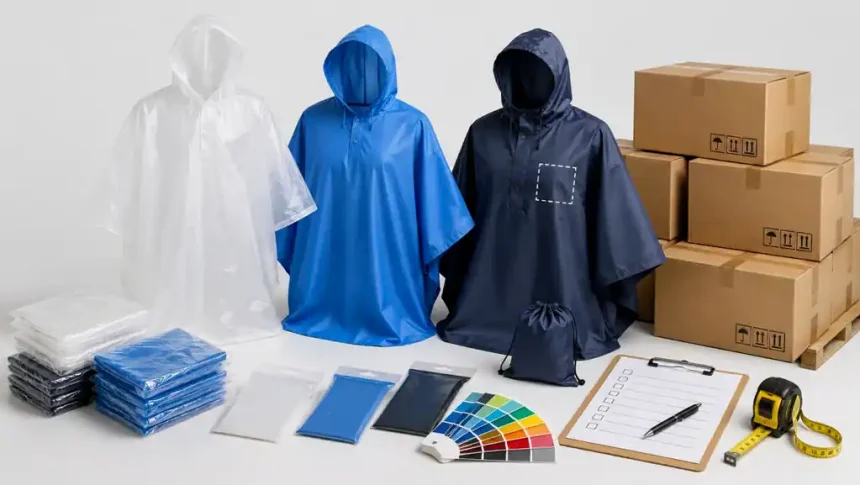
Custom bulk rain ponchos sound like a straightforward procurement process. The item is light, easily distributed, and highly functional in most rainy day scenarios. However, in a business-to-business environment, the true difficulty lies not just in finding a poncho supplier, but ensuring that the end product is right for the specific scenario, price range, branding needs, time frame, and consumer requirements.
An item bought for one-day event use in the open air does not necessarily need the same materials as the item in a travel set. One product can be meant for brand promotion, whereas another might have more coverage. Buyers need to check out a number of factors before placing an order.
Common Use Cases for Custom Rain Ponchos
The first thing that should be determined is where and how the ponchos will be used. Customized ponchos for rain purposes are common at outdoor events, sporting matches, music festivals, tourism, school programs, emergency kits, and as part of marketing efforts. In this case, the critical aspects will be convenience, ease of distribution, packaging, and affordability.
If it is for travel or retail purposes, the consumer may prioritize aesthetics, compact packing, re-useable packaging, and comfort. When it comes to usage by outdoor workers, delivery services, and temporary labor, coverage and durability of materials may matter more than low prices.
This is the reason why buyers should not consider all ponchos to be the same product. The purpose of the poncho will determine any further decision-making related to materials, dimensions, placement of logo, packaging, and lead time.
Material Choice: PE, EVA, PVC, or Polyester
Material selection directly influences the cost, weight, durability, and user experience. For instance, PE ponchos are preferred for mass distribution at events since they are lightweight and cheap. They are applicable in situations where there is a need for temporary rain protection.
EVA ponchos, on the other hand, tend to be softer and are thus appropriate when the buyer desires a more durable product. PVC rain wear gives superior water repellent properties and durability although they might be heavier than PE ponchos. Polyester based rain wear resembles garment rainwear to some extent.
A cheaper material is not necessarily wrong in itself. What is important is whether the poncho will be used once, several times, sold again, or whether it is meant to facilitate people’s work. It is a matter of compatibility between the material and the buyer’s situation.
Size, Coverage, and Wearing Comfort
Many buyers focus on material and price but overlook fit. For ponchos, size affects both protection and user satisfaction. A poncho used at an outdoor event should be large enough to cover normal clothing and allow basic movement. If users may carry backpacks, bags, or uniforms, extra coverage may be needed.
Buyers should check body length, sleeve or side design, hood structure, snap buttons, and opening style. A hood that is too loose may reduce rain protection, while a poncho that is too narrow can feel uncomfortable during movement.
Sample approval is useful here. Flat measurements are important, but actual wearing tests can reveal issues that a size chart may not show.
Logo Printing and Customization Details
For promotional orders, customization is often as important as the poncho itself. Buyers should confirm logo size, print position, color accuracy, and printing method before mass production. The surface of PE, EVA, PVC, and polyester materials may respond differently to printing, so a digital mockup alone is usually not enough.
Logo placement should also reflect the use case. A large back logo may work well for event staff, while a smaller chest logo may be more appropriate for retail or corporate giveaways. In some cases, printing on the pouch or individual packaging may provide better brand visibility than printing only on the poncho.
Before production, buyers should request a pre-production sample or at least a clear proof that shows logo position, color, and scale.
Packaging, MOQ, and Lead Time Planning
Packaging influences the ease of distribution, storage, transportation, and retail display. An easy poly bag could do for an event, while a reusable pouch, header card, bar code label, or printed bag could be required for retail and gift programs.
It is equally important that purchasers verify the carton count, carton dimensions, unit weight, and label specifications. This becomes necessary when there is a need to ship internationally, store in warehouses, and distribute on specific dates.
MOQ and lead time should be checked from the outset. When there is a need for customized goods, the purchaser will have to confirm the artwork, samples, material readiness, printing, packaging, testing, and delivery. For event-based purchase orders, the purchaser needs to work backwards from the date of the event.
Quality Checks Before Mass Production
A bulk poncho order should be checked before production moves too far. Important points include material thickness, color consistency, waterproof performance for the intended use, button strength, hood shape, printing adhesion, folding condition, smell, and packaging accuracy.
One common risk is choosing the lowest unit price without checking whether the product fits the real use case. Disposable ponchos can be practical for short outdoor events, but they should not be expected to perform like durable work rainwear. Another risk is approving artwork without checking how the logo appears on the actual material.
A clear sample process reduces misunderstandings between buyer and supplier.
Supplier Capability and Product Range
After buyers understand the material, size, printing, packaging, and timing requirements, supplier evaluation becomes easier. A suitable supplier should be able to discuss different material options, explain customization limits, provide samples, confirm packing details, and support bulk production planning.
In this context, suppliers such as Raincoat Gift can be evaluated by how their product range fits different procurement needs. For buyers comparing PE, EVA, PVC, polyester, or PU rainwear, reviewing custom rain poncho and raincoat options can help clarify which product type is closer to the intended use.
The supplier conversation should focus on practical questions: What material is suitable for the event? What packaging is available? How will the logo be printed? What is the sample timeline? What should be confirmed before mass production?
Conclusion
Ordering custom rain ponchos in bulk should start with the use case, not only the unit price. Buyers need to define where the ponchos will be used, how long they should last, how they will be distributed, and what branding result is expected.
A well-planned order usually includes material comparison, size confirmation, logo proofing, packaging review, realistic lead time planning, and sample approval. When these details are clear, the final product is more likely to meet both buyer expectations and end-user needs.
FAQ
Q1: What kind of material is used to manufacture low-cost event ponchos?
A: Polyethylene is widely used to distribute event ponchos as it is cheap, lightweight, and cost-efficient. Buyers should ensure that the thickness, dimensions, and package meet their needs.
Q2: Are there any benefits of choosing EVA ponchos rather than PE ones?
A: It is not always necessary. EVA material is usually softer than PE, which makes it preferable for reusable or more valuable promotions.
Q3: What steps should buyers take before confirming their logo?
A: It is crucial for buyers to approve the size, location, colors, the way of logo printing, and the image of logo printed on the material sample.
Q4: When should buyers order bulk ponchos for an event?
A: It depends on many factors like volume, customization, sample approval process, packing, shipping option. Buyers who organize events have to consider all this in advance.
Q5: Can custom rain ponchos be used as promotional products?
A: Yes, because they are appropriate for various events and occasions like outdoor parties, travel promotions, sports activities, etc.