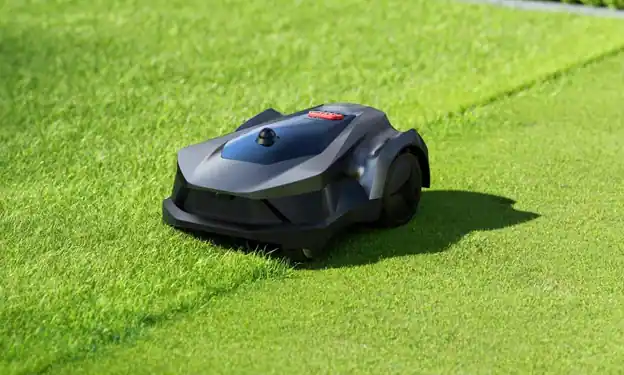
The idea of a lawn that mows itself sounds appealing in the abstract. In practice, people want to know whether it actually works, how much effort setup requires, and whether the results are good enough to justify switching from a mower you already own.
Here is an honest look at what a robot mower does well, where it has real limitations, and what kind of yard it suits best.
How Robot Lawn Mowers Actually Work
A robot lawn mower operates differently from a traditional mower in one fundamental way: it mows frequently in small increments rather than weekly in one long session. Most models run daily or every other day, cutting a small amount of grass each time. This approach — called mulch mowing — keeps clippings so short they break down quickly into the soil, eliminating the need to collect or bag them.
Modern perimeter-wire-free models use GPS and sensors to navigate without a physical boundary cable. They map the yard, detect obstacles, and return to their charging base when the battery runs low or the job is complete. Rain sensors pause operation during wet conditions and resume automatically once it is safe.
The Lawn Quality Argument
Frequent, light mowing actually produces and better-looking lawn than the weekly heavy cuts. Cutting only the top third of the grass blade at a time reduces stress on the grass, encourages lateral growth (which fills in thin patches), and keeps the lawn at a uniform height without the scalping risk that comes with infrequent deep cuts.
Many homeowners who switch to robotic mowing report that their lawn quality improves within a few weeks of consistent use. The regular schedule and consistent cut height produce a more even, dense lawn over time.
What Kind of Yard Works Best
Robot mowers work best on relatively flat, open lawns without complex obstacles. A standard suburban front or back yard with clear perimeter definition is the ideal use case.
Small obstacles — toys left on the lawn, garden hoses, low furniture — are detected by sensors and navigated around. Very tall weeds or overgrown sections may need a manual pass before the robot takes over, since it is designed for maintenance rather than recovery mowing.
The Time Savings Are Real
The average homeowner with a half-acre yard spends about two to three hours per week on lawn mowing during the growing season. Over a full season, that is a significant time commitment. A robot mower eliminates essentially all of that active time. Setup and occasional maintenance take maybe an hour per month once the system is running.
For families with busy schedules, vacation properties, or homeowners who find lawn maintenance genuinely taxing, the value proposition is straightforward: the lawn stays consistently maintained without any active weekly time investment.
Noise and Neighborhood Considerations
Robot mowers run at a fraction of the noise level of gas or battery-powered traditional mowers. This makes it practical to schedule them during hours that would be inconsiderate with a loud mower — early mornings, evenings, or during periods when you are at work. Many homeowners run them overnight in areas where local ordinances permit it.
The quiet operation is a genuine lifestyle benefit that is easy to underestimate until you experience it. No gas smell, no vibration, no noise — just a small machine moving quietly across the lawn while you do something else entirely.
What to Look for When Comparing Models
The most important specifications are lawn coverage area (measured in square feet or acres), slope handling capability, and navigation system. GPS-based navigation without a perimeter wire is significantly easier to set up and maintain than wire-based systems. Connectivity features (app control, scheduling, rain detection) are standard on most current models.
Battery runtime matters for larger yards, but since the robot docks and recharges automatically, it is less critical than it would be for a handheld tool. What matters more is whether the model can resume from where it left off after recharging.
Conclusion
A robot mower is worth it for homeowners who value consistent lawn quality without the weekly time commitment. The technology has matured to a point where setup is straightforward, lawn results are genuinely good, and the only real limitation is yard complexity. For a standard suburban lawn, it is one of the more impactful time-saving tools available.