Burnt orange wedding flowers are bold, warm, and easy to remember, but they need the right pairings to look refined. Terracotta, rust, cream, sage, beige, and soft greenery can all work with burnt orange, but each color plays a different role. If the same strong orange appears in every bouquet, boutonniere, centerpiece, and cake flower, the design can start to look heavy instead of intentional.
The best approach is to decide where burnt orange should lead and where it should simply appear as an accent. That choice will shape the bouquet, bridesmaid flowers, small floral details, and reception decor.
Decide the Role of Burnt Orange First
Before choosing individual flowers, decide whether burnt orange will be the main color or just a warm accent. If it is the main color, balance it with cream, ivory, beige, sage, or pale greenery. If it is only an accent, use it in smaller details such as ribbon, greenery accents, boutonnieres, or cake flowers.
Let the Burnt Orange Wedding Bouquet Set the Tone
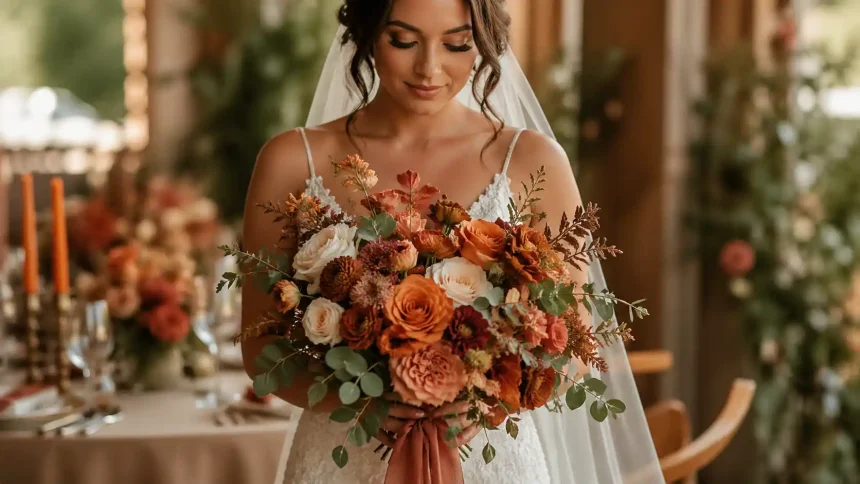
The bridal bouquet is usually the best place to use burnt orange boldly because it sets the visual tone for the rest of the flowers.
Couples who want the bouquet to carry the strongest warm tone can compare Rinlong burnt orange wedding bouquet options to see how terracotta, rust, cream, and greenery work together before planning the smaller floral pieces.
Once the bouquet direction is clear, use it as a guide rather than a template. Bridesmaid flowers, boutonnieres, wrist corsages, cake flowers, and table arrangements can echo the bouquet without copying every color at the same strength.
Pair Burnt Orange with Softer Colors
Pair burnt orange with colors that change its mood. Cream and ivory make it brighter, beige and champagne make it softer, and sage or eucalyptus keeps the warmth from feeling too dense. Burgundy can add depth, but it works best as a small accent unless the wedding is meant to feel dramatic.
Pair Bold Bouquets with Lighter Bridesmaid Flowers
Bridesmaid bouquets should soften the bridal bouquet rather than compete with it. If the bride’s bouquet uses strong burnt orange and terracotta, the bridesmaid flowers can lean more toward cream, blush, sage, or beige, with only a few warmer accents.
The dress color matters too. Burnt orange, rust, copper, champagne, and dusty rose bridesmaid dresses are already warm in tone. If the flowers are too close to the dress color, they may disappear. If they are too bold, the wedding party can look dark in photos. Softer flowers also keep warm-toned dresses from looking too heavy in group photos.
Use Rinlong Burnt Orange Flowers in Smaller Details
Smaller floral pieces are a good place to repeat burnt orange without making the palette feel overloaded. A boutonniere may only need one rust accent and a bit of greenery. A wrist corsage often works better with softer tones, so it does not overpower the dress. Cake flowers can carry the same palette in a cleaner, lighter way.
When couples want the smaller pieces to match the bouquet without copying it, looking through Rinlong burnt orange flowers can show how the same warm palette appears across boutonnieres, wrist corsages, cake flowers, centerpieces, and other details.
Pair Rich Flowers with Simpler Tables and Decor
Tables are where burnt orange can become overwhelming if everything is used at once. Dark flowers, terracotta napkins, wood chargers, gold flatware, candles, and heavy greenery can all look beautiful on their own, but together they may feel crowded.
If the centerpieces are rich in color, keep the linens and place settings more understated. If the table already has warm textures, use more cream flowers or greenery in the arrangements. For ceremony decor, a floral arch or aisle arrangement does not need every color from the bouquet. It can repeat the main warm tone, then use softer filler flowers to keep the space open.
Check the Whole Palette Before the Wedding
Before the wedding, review the full floral list by category. Which pieces carry the strongest burnt orange? Which pieces soften the palette? Which details will appear together in photos?
Avoid choosing one dramatic bouquet first, then adding other pieces that do not quite match. The bouquet, bridesmaid flowers, boutonnieres, wrist corsages, cake flowers, and table pieces do not need to match exactly, but they should clearly belong to the same palette.
Burnt orange works best when it has a clear role. Use it boldly in the bouquet, lightly in the smaller details, and carefully in the reception decor. That balance gives the wedding warmth without making every floral piece feel too visually dense.